Deadwood and hazard limb removal
Targeted cuts to remove dead, cracked, hanging, or storm-stressed limbs that are most likely to fail.
Serving San Antonio, Texas & surrounding areas
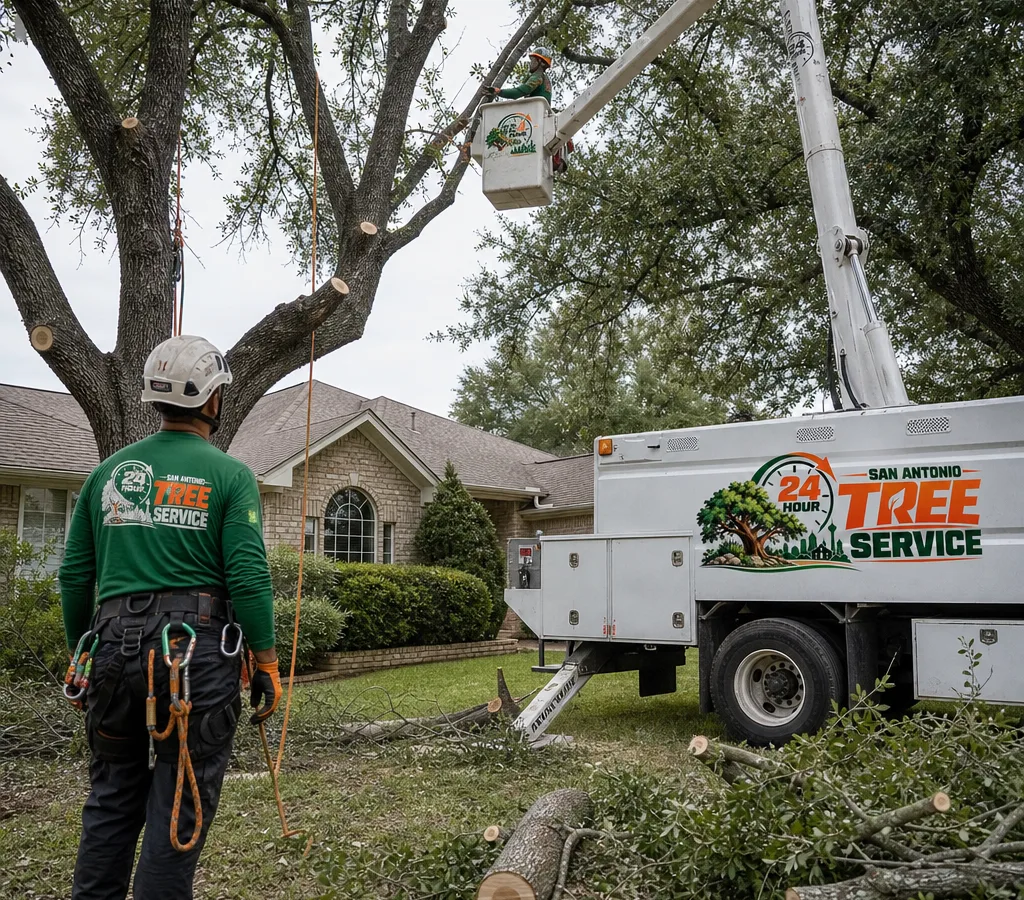
Tree Trimming Service · San Antonio, Texas
Get safer limbs, cleaner sightlines, and healthier growth with professional pruning, careful rigging, and a full debris haul-off, scheduled around your property and your week.
✓On-Site Assessment
✓Selective Pruning
✓Careful Rigging
✓Debris Haul-Off
Selective Pruning, Practical Results
If you are searching for tree trimming San Antonio homeowners can count on, the goal is simple: reduce risk, improve clearance, and keep trees structurally sound without over-pruning. 24 Hour Tree Service San Antonio trims for real-world concerns like limbs over roofs, branches rubbing in wind, low clearance over driveways, and deadwood that can come down in storms.
Good pruning is selective work. We look at branch attachments, weight distribution, and how a canopy moves in gusts before anything gets cut. You get a written scope, a clean work area, and cleanup that leaves the yard usable the same day.
Some situations need removal instead of pruning. If inspection shows a tree is beyond trimming because of major decay, severe lean, or storm damage, we will explain why and what a safer plan looks like. When that is the case, the details for tree removal in San Antonio are handled as a separate scope so you are not guessing what is included.
Scope Built Around the Tree
Targeted cuts to remove dead, cracked, hanging, or storm-stressed limbs that are most likely to fail.
Lift low limbs over sidewalks, driveways, patios, and parking areas so people and vehicles have room.
Reduce branch contact and rubbing against shingles, gutters, fascia, and windows without stripping the tree.
Selective thinning to reduce sail effect and interior crowding while keeping the canopy's natural shape.
Prune back growth that is encroaching toward service drops or spans, using growth-oriented cuts instead of topping.
Brush, limbs, and rake-up removed so you are not stuck with a pile after the crew leaves.
Structure, Access, and Clearance
Tree trimming in San Antonio, TX often comes down to managing growth around homes, driveways, and overhead service lines while keeping trees healthy in heat and drought swings. At the visit, we focus on a few make-or-break items:
You will hear us talk in plain pruning terms. That includes thinning, raising, reduction cuts, and collar cuts (cutting just outside the branch collar) to help the tree close the wound. If someone suggests topping, it is worth getting a second opinion; topping can create weak regrowth and a higher-maintenance tree.
For local context, we commonly schedule trims in areas like Stone Oak where street trees and landscaped lots can need routine canopy shaping for driveway and sidewalk clearance, Alamo Heights where mature trees often require careful thinning above roofs, and neighborhoods near Leon Creek where trees along drainage corridors can put weight out over back fences after fast growth seasons.
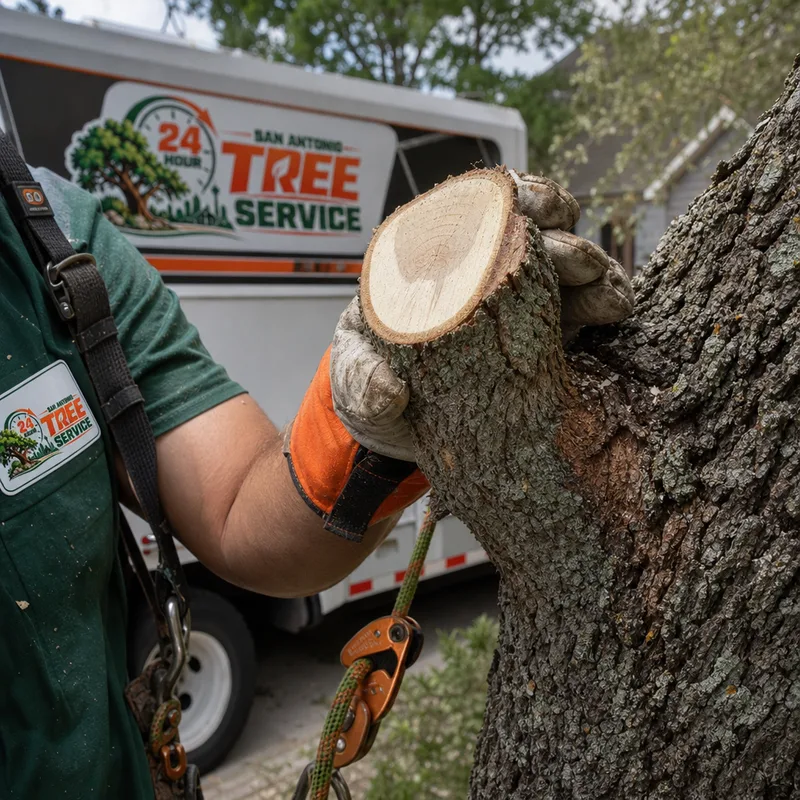
Assessment to Final Walk-Through
The work sequence is built around safe access, property protection, targeted cuts, and a clean finish.
We walk the property, identify the branches that matter, and plan the safest approach for roofs, fences, and nearby lines.
We stage equipment, protect access paths, and establish a controlled drop zone. When needed, we use ropes and rigging to lower pieces instead of free-dropping.
We trim for clearance and structure first, then refine the canopy to keep the tree balanced and reduce future breakage.
Brush and wood are removed, hard surfaces are blown off, and the work area is raked so you can use the yard again.
We confirm the scope is complete, show what was removed, and talk through what to watch for as the tree regrows.
Inspection-Based Pricing
Tree trimming in San Antonio typically ranges from about $150 to $750 per tree, with small clearance trims often at the low end and large, high-risk canopy work running $800 to $2,000+ when rigging, climbing, or a bucket is required.
Your final price depends on tree size and species, how much is being removed, access (tight side yards, slopes, fences), proximity to roofs or lines, and whether you want debris hauled off or wood left on-site. Exact pricing is confirmed after an on-site look at the tree and the drop zone.
Clearance, Rigging, and Cleanup
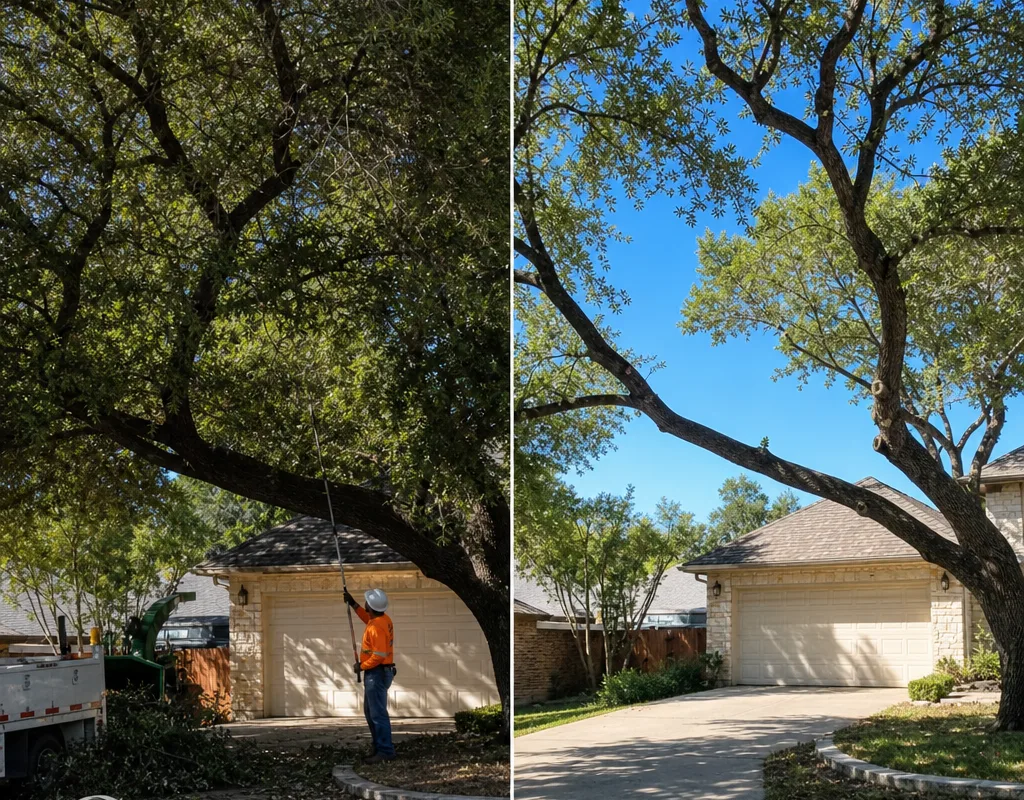
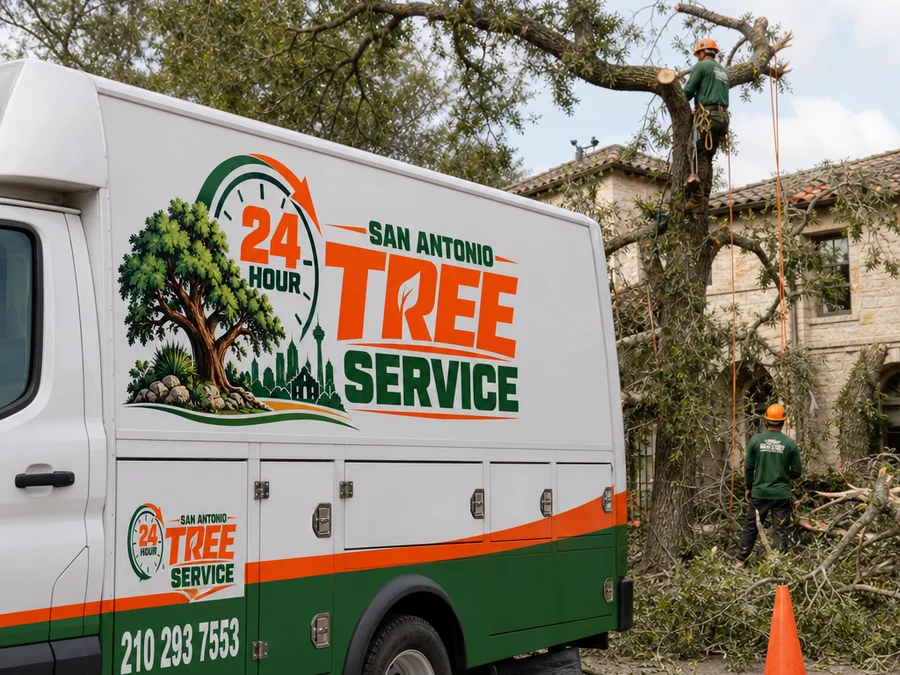
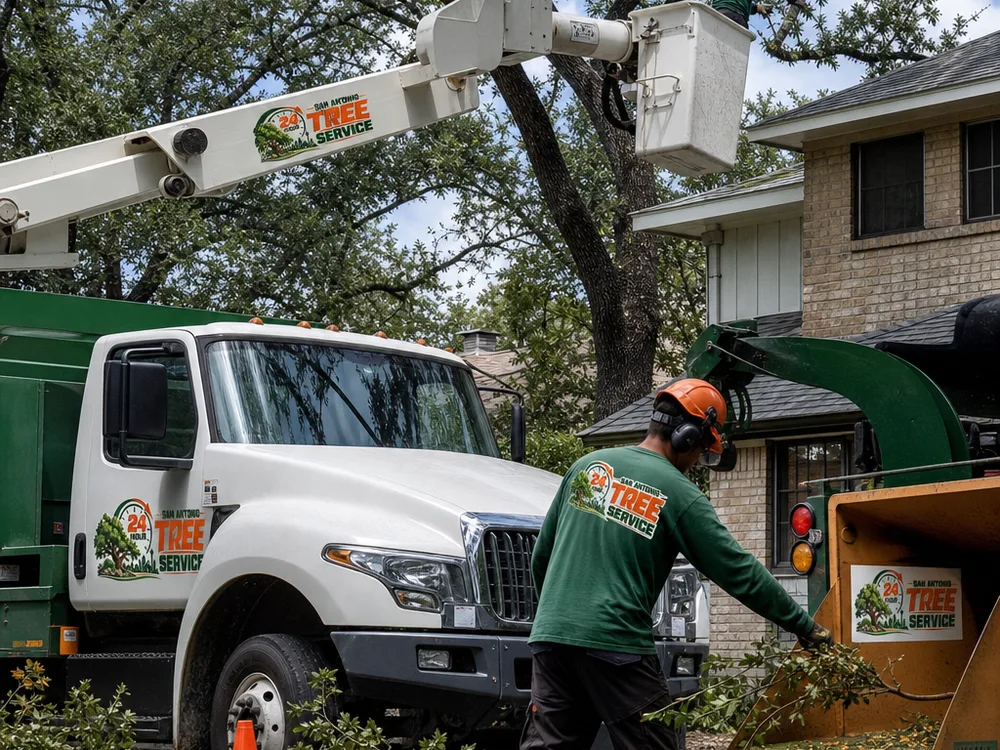
Fix the clearance problem without harming the tree.
If you want a trim that fixes the clearance problem without harming the tree, share a few photos and the main concern (roof, driveway, lines, deadwood) and we will recommend the right scope.
Answers Before Pruning Begins
Most trims can be scheduled year-round, but timing depends on the tree and the goal. Structural and clearance pruning is often easier to plan when growth is slower, while storm-related hazard trimming is handled whenever it is needed. If your concern is dead limbs over the house or driveway, it is usually better to address it now rather than wait for a season change.
A mature tree is commonly trimmed every 2 to 5 years, but fast-growing trees or canopies over roofs may need attention sooner. The right interval depends on growth rate, prior pruning quality, and whether branches are extending toward structures, sidewalks, or service drops. After we trim, we can suggest a practical re-trim window based on how the tree responded.
Yes, a reduction trim can create lasting clearance from roof edges and gutters when it is done with proper cuts and the canopy is balanced. The key is trimming back to suitable laterals rather than shearing the exterior. If you have consistent contact during wind, we will plan for extra buffer because branches sway more than most homeowners expect.
Trees near utility lines require extra caution and may involve coordination depending on the exact line type and location. For branches close to energized lines, the safest next step is an on-site look so we can determine access, required clearances, and whether the utility provider needs to be involved. Do not attempt DIY cutting near lines; even small limbs can make dangerous contact when they swing.
Thinning selectively removes interior branches to reduce crowding and wind resistance, raising removes low limbs to increase ground clearance, and reduction shortens specific limbs to pull weight back from roofs, fences, or weak unions. A quality trim often uses a mix of these methods, tailored to what is actually causing the problem on your property.
Yes, trimming scopes are commonly done with full cleanup and haul-off so you are not left with brush piles. If you prefer to keep wood for firewood or leave chips for mulch, that can usually be planned in advance so the crew stages material where you want it.
No, topping removes large portions of the canopy without regard to proper growth points, and it can lead to weak, fast regrowth and higher long-term maintenance. Trimming uses selective cuts to improve clearance and structure while keeping the tree's natural form. If your tree is too tall for the location, we can talk through safer options during the visit.
Plan the Right Trim
Tell us what you want to fix (clearance, deadwood, roof contact, storm prep) and we will confirm the right scope for your trees, your access, and your schedule in San Antonio.