Storm-risk reduction
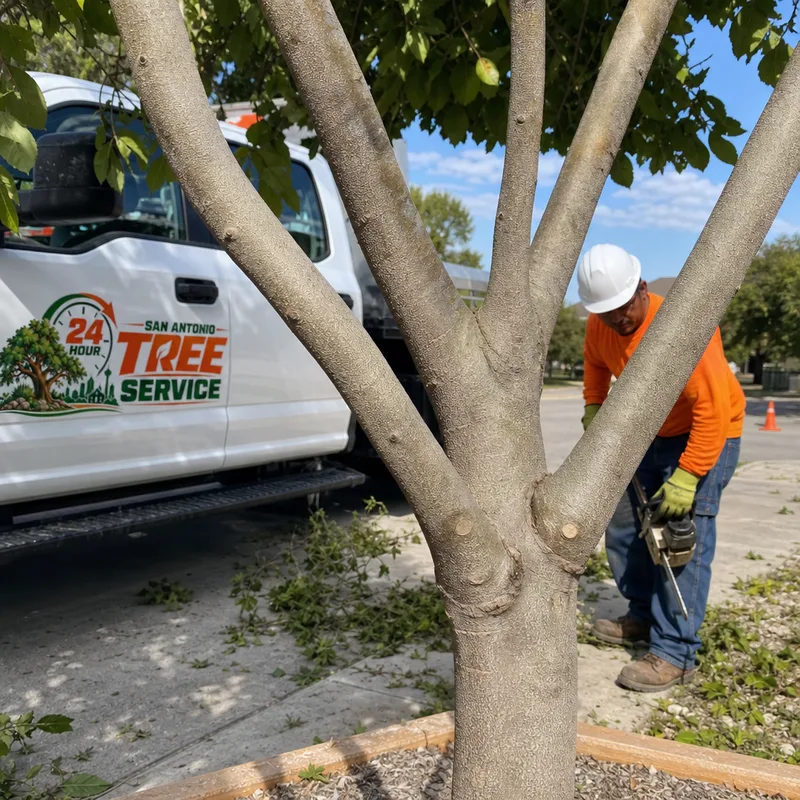
Remove deadwood, cracked limbs, and rubbing branches before they fail. We also look for weak attachments (tight V-shaped crotches) that commonly split under wind load.
Serving San Antonio, Texas & surrounding areas
Tree Pruning Service · San Antonio, Texas
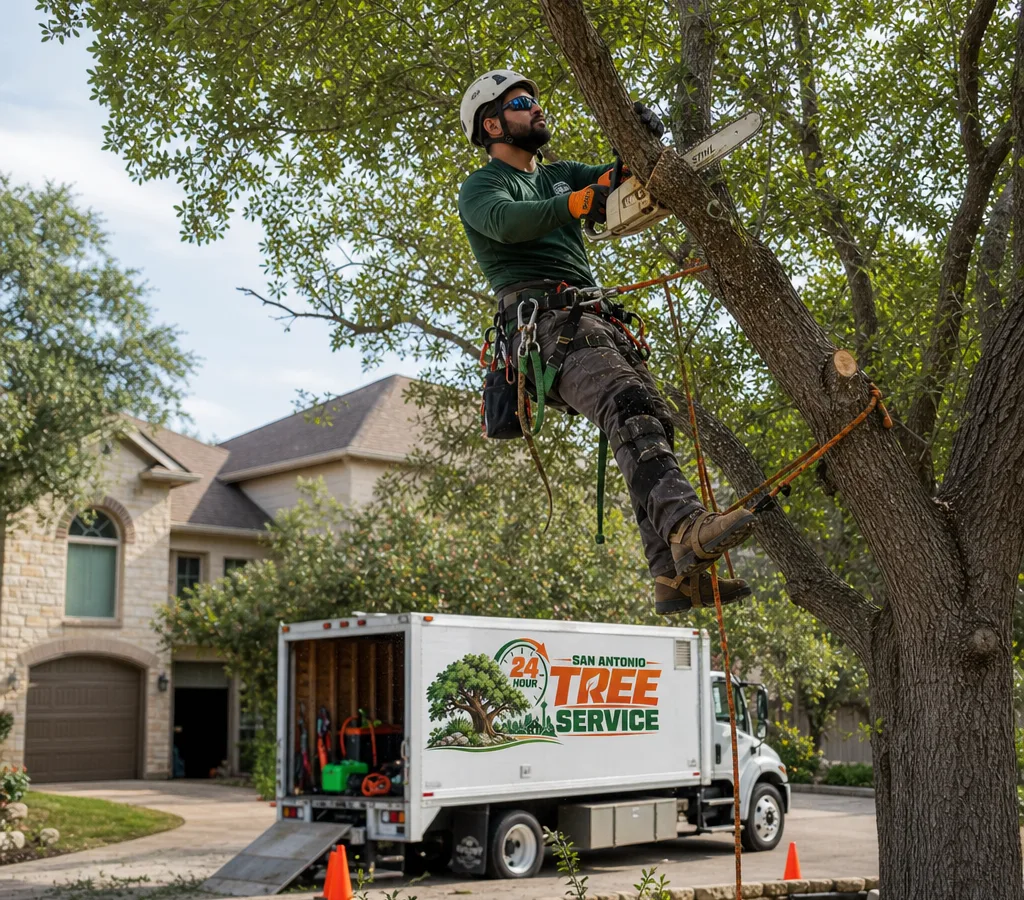
Reduce limb-fall risk, keep branches off roofs and service lines, and help trees grow with cleaner structure. Get a clear scope and a tidy cleanup from local crews that work safely around homes and driveways.
✓On-Site Evaluation
✓Targeted Cuts
✓Property Protection
✓Tidy Cleanup
Safety and Plant Health
San Antonio tree pruning is part safety work and part plant health work. Done well, it reduces the chance of broken limbs in storms, improves clearance over roofs and walkways, and shapes young trees so they develop strong branch unions. Done poorly, it creates long-term problems like weak regrowth, sunscald on newly exposed trunks, and rot that starts at bad cuts.
Our team at 24 Hour Tree Service San Antonio focuses on correct cuts and realistic goals. That means pruning for structure, clearance, and tree health, then stopping before we cross into harmful over-thinning. We aim to leave a natural canopy, remove what needs to go, and keep the tree's growth habit in mind instead of forcing a shape that will fail later.
If you also need hazardous removals, we handle that too, and many customers compare pruning versus taking a tree down after an on-site look. When removal is the safer route, the process is different, and you can review options for tree removal in San Antonio as part of the same planning conversation.
Pruning With a Purpose
Remove deadwood, cracked limbs, and rubbing branches before they fail. We also look for weak attachments (tight V-shaped crotches) that commonly split under wind load.
Lift and shorten where needed so branches stay off shingles, gutters, and vehicles. Clearance pruning can also help keep leaves and small twigs from constantly loading roof valleys.
We plan cuts to reduce contact with overhead lines and service drops. If work is too close to energized utility conductors, we will recommend the appropriate utility coordination instead of improvising.
Selective pruning on smaller trees guides a strong central leader (when appropriate), better spacing between scaffold limbs, and less future conflict with buildings.
Targeted thinning can improve airflow and reduce limb-to-limb rubbing, while keeping enough leaf area for the tree to stay vigorous in hot weather.
Measured Arborist Practices
A good pruning job starts with a walk-around. We identify dead, broken, or diseased wood, note structural issues, and confirm what you want to achieve: clearance, balance, view, or reducing weight on a long limb.
Then we prune using established arborist practices:
We avoid topping. Topping creates weakly attached shoots and often leads to repeated cycles of heavy cutting. If a tree is already overgrown for its spot, we will talk through realistic choices: staged reduction over time, removal and replacement, or pruning that meets clearance needs without stressing the tree.
San Antonio heat is hard on newly exposed bark and stressed trees. That is another reason we prefer measured pruning that preserves enough canopy to shade the trunk and main limbs.
Evaluation to Cleanup
Each job is planned around the tree, access, nearby property, and a controlled finish.
We confirm access, identify targets (deadwood, clearance points, structural issues), and agree on what will be cut. If there are roofs, fences, or landscaping under the canopy, we plan rigging and drop zones accordingly.
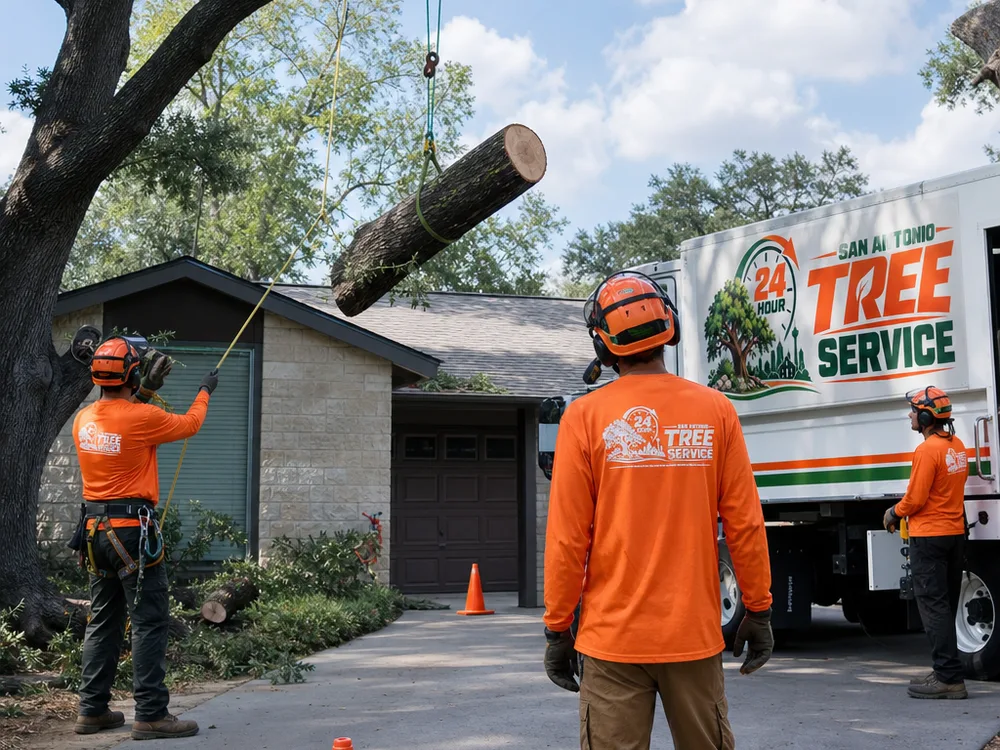
We stage equipment to protect driveways and keep paths open where possible. For larger trees, we use ropes and controlled rigging so limbs come down safely without swinging into the home.
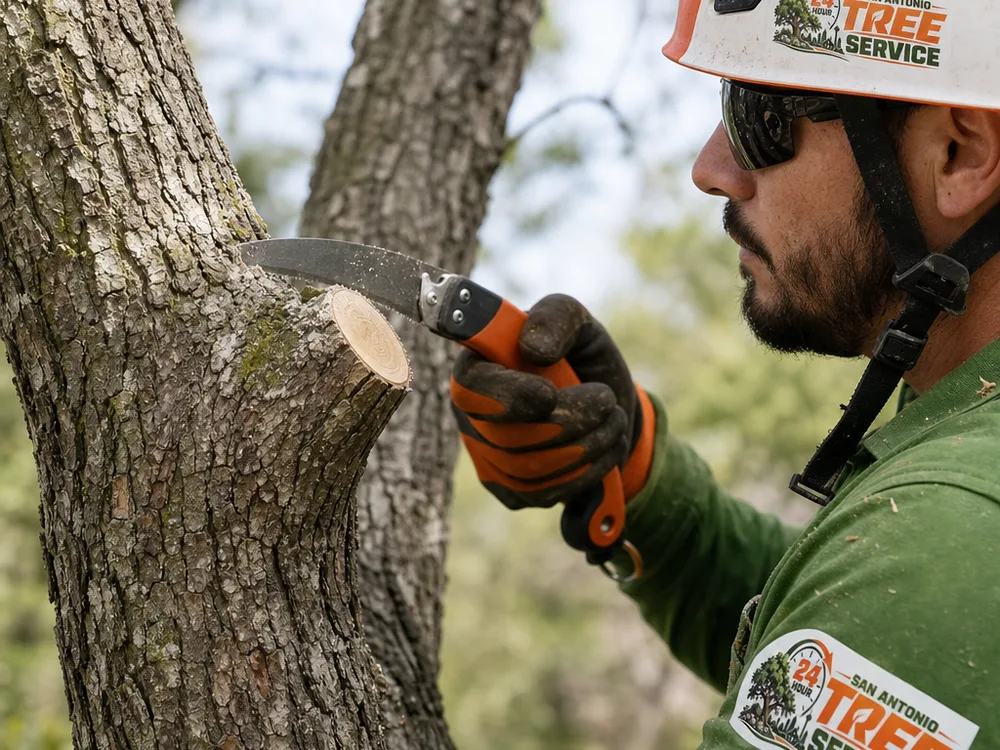
We make the planned cuts, then step back to check balance and clearance. If anything looks over-thinned, we stop rather than chasing a “perfect” look that harms the tree.
We collect brush, rake impacted areas, and leave the work zone orderly. If you want wood left on-site for firewood or future use, confirm that up front so we can stack it safely.
Inspection-Based Pricing
Tree pruning in San Antonio typically ranges from about $200 to $600 for a straightforward trim on a small to medium tree, while large-canopy trees or heavy rigging near roofs commonly run $700 to $1,800+ per tree. Multi-tree visits are often priced as a single scoped job rather than a strict per-tree number.
Your exact price depends on tree size and species, how much needs to be removed, access (tight side yards, fences, overhead obstacles), proximity to structures and lines, and whether haul-off is included. Final pricing is confirmed after an on-site evaluation of the tree and the drop zone.
Clearance, Structure, and Protection
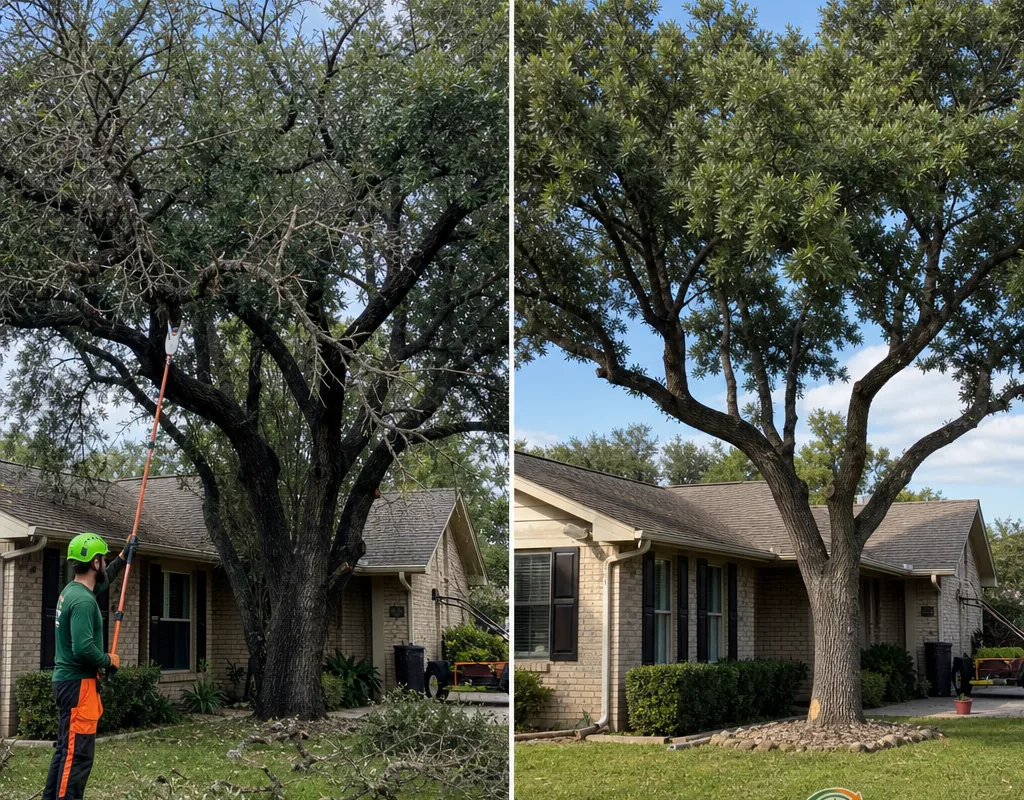
Start with a pruning plan that fits the tree.
If you want the trees in your yard to look better and stay safer through windy weather, start with a pruning plan that matches the species, the structure, and the space around the tree.
Answers Before Work Begins
Most routine pruning can be scheduled any time of year, but the best timing depends on the tree species, current stress level, and your goal (deadwood removal, clearance, or structure). In San Antonio's heat, we often recommend avoiding overly aggressive pruning right before the hottest stretches, and focusing on measured, targeted cuts that preserve enough canopy.
A common approach is light maintenance every 2 to 4 years for mature yard trees, with younger trees benefiting from more frequent structure-focused pruning early on. Fast growers and trees near roofs or driveways may need attention sooner, especially after storm seasons when broken or hanging limbs can appear.
Yes. Pruning over structures usually requires controlled rigging so limbs can be lowered safely instead of dropped. During the on-site evaluation we identify where pieces can land, what needs rope work, and how much clearance you want from shingles, gutters, vehicles, and walking paths.
Pruning can sometimes reduce weight on an extended limb, but it cannot “straighten” a leaning tree or fix a root problem. If we see signs that the issue is stability-related (soil heaving, sudden lean, major cracks), we'll recommend the safest next step instead of trying to prune our way out of a hazard.
We do not recommend topping because it creates weak, fast regrowth and can start long-term decay at large cut points. If size is the problem, we can discuss reduction pruning, staged pruning over time, or whether removal and replacement makes more sense for the space.
Most customers choose haul-off so the yard is usable immediately, but keeping wood on-site is also an option if you want it stacked for later use. Confirm your preference during the scope so the crew can plan loading, chipper placement, and where any kept material will be piled.
Plan the Right Cuts
Tell us what you want to fix, such as roof clearance, dead limbs, or shaping a young tree. We'll confirm what should be cut, what should stay, and what the cleanup will look like before work starts.