Safety-first job setup
We establish a work zone, assess targets like roofs and fences, and choose the cutting and rigging approach that fits the site conditions.
Serving San Antonio, Texas & surrounding areas
Tree Service · San Antonio, Texas
Get safe, clean tree work handled by insured crews with fast scheduling, clear communication, and a jobsite that is left tidy when we are done.
✓Insured Crews
✓Controlled Rigging
✓Fast Scheduling
✓Debris Haul-Off
Controlled Work, Clean Finish
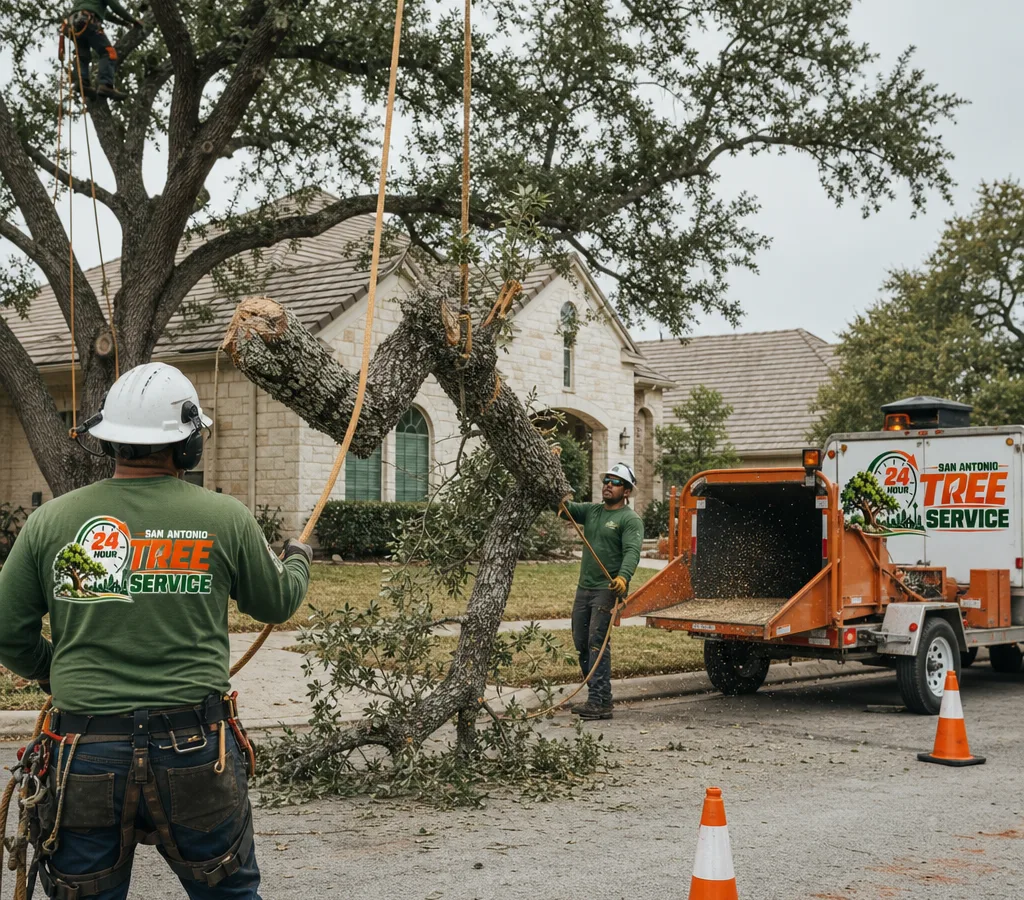
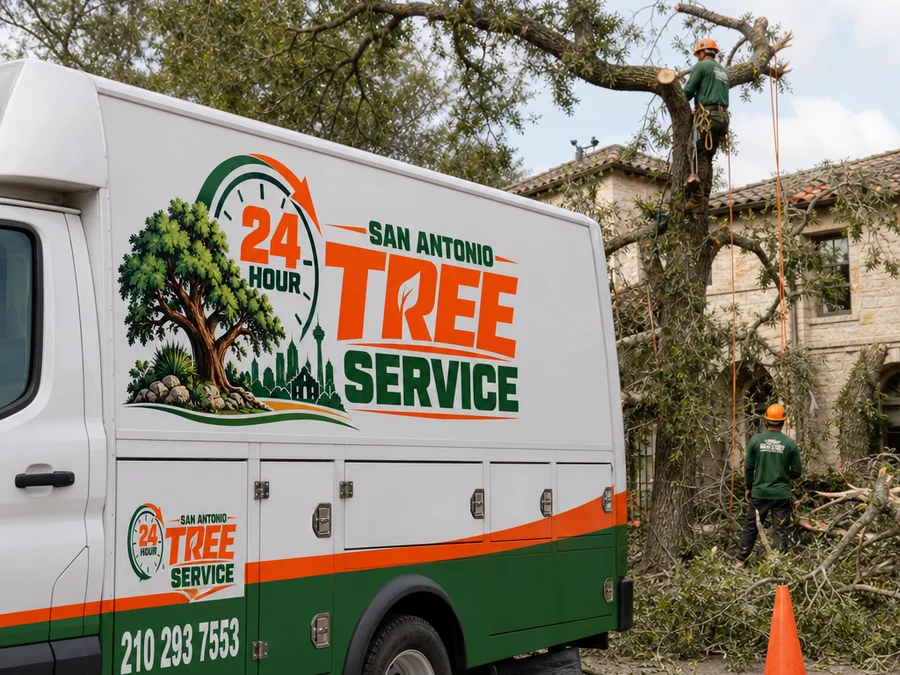
If you are searching for tree service San Antonio homeowners can rely on, start with two things that protect your property: controlled cutting and a real cleanup plan. Tree work is heavy, awkward, and often close to roofs, fences, driveways, and overhead lines. A careful crew uses proper rigging (ropes, friction devices, and lowering techniques), sets a clear drop zone, and stages equipment so debris moves out efficiently instead of getting dragged across your yard.
24 Hour Tree Service San Antonio provides tree service in San Antonio for routine maintenance, storm-damaged trees, and removals that require tight, methodical work. We focus on residential and light commercial properties throughout the city, and we show up with the equipment and staffing needed for the scope discussed.
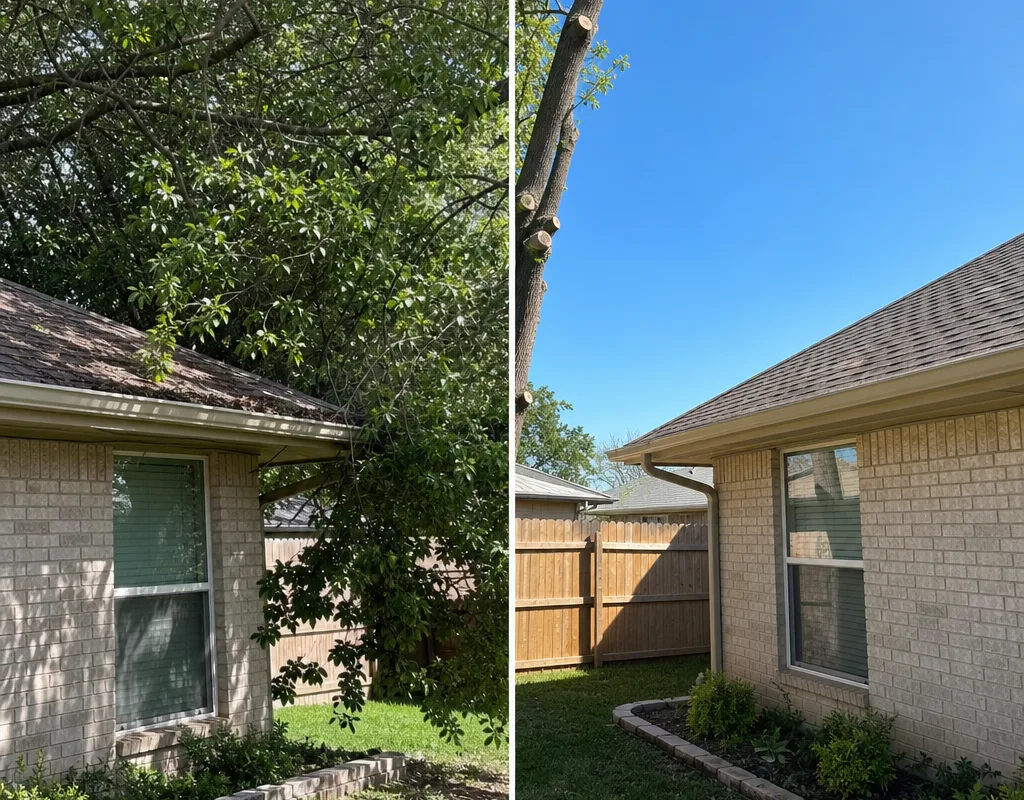
When a tree has to come down, the details matter. Sectional dismantling, limb-by-limb lowering, and careful trunk blocking reduce risk when there is not enough room to fell a tree in one piece. When the goal is better health and fewer problems later, targeted trimming removes deadwood, reduces weight on long limbs, and improves clearance away from structures.
Prepared for the Property
We establish a work zone, assess targets like roofs and fences, and choose the cutting and rigging approach that fits the site conditions.
You get a written plan for what is being removed or trimmed, what is staying, where debris goes, and what the finished area looks like.
Chainsaws, rigging gear, chippers, and hauling capacity are planned around access, limb size, and how much material will be produced.
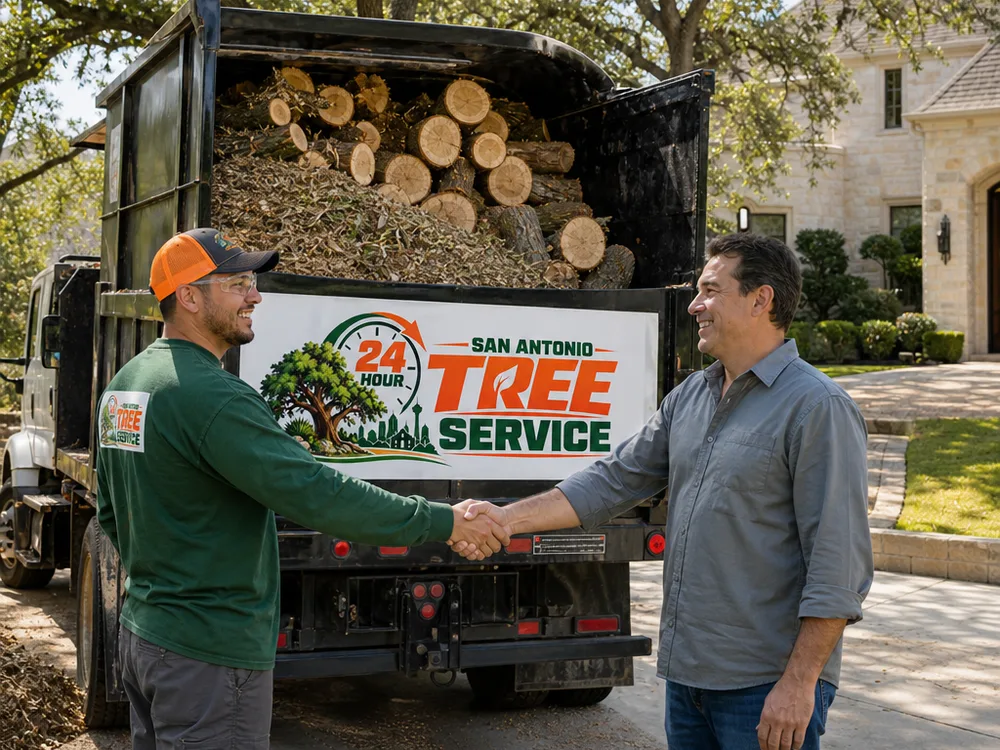
Brush, limbs, and log sections are removed as agreed. We rake and blow hard surfaces so the property is usable again.
Tree work is high risk. Using insured professionals protects you and reduces the chance of costly surprises.
When a tree is split, leaning, or blocking access after a storm, quick triage and prompt service matter.
Conditions We Handle
A good San Antonio tree service should be able to explain which approach is safest and why, not just quote a number. These are some of the most common situations we see:
If you already know removal is required, our tree removal service in San Antonio covers what to expect when a tree needs to come down and how we handle controlled dismantling and cleanup.
Assessment to Final Cleanup
Each visit follows a controlled sequence built around access, property protection, careful cutting, and cleanup.
We look at the tree's condition, lean, targets (roof, fence, vehicles), and access for equipment. If work is near overhead lines, we plan conservative clearances and the safest cutting direction.
You get a clear scope of what is being trimmed or removed, how debris will be handled, and any optional add-ons such as hauling logs or stump work.
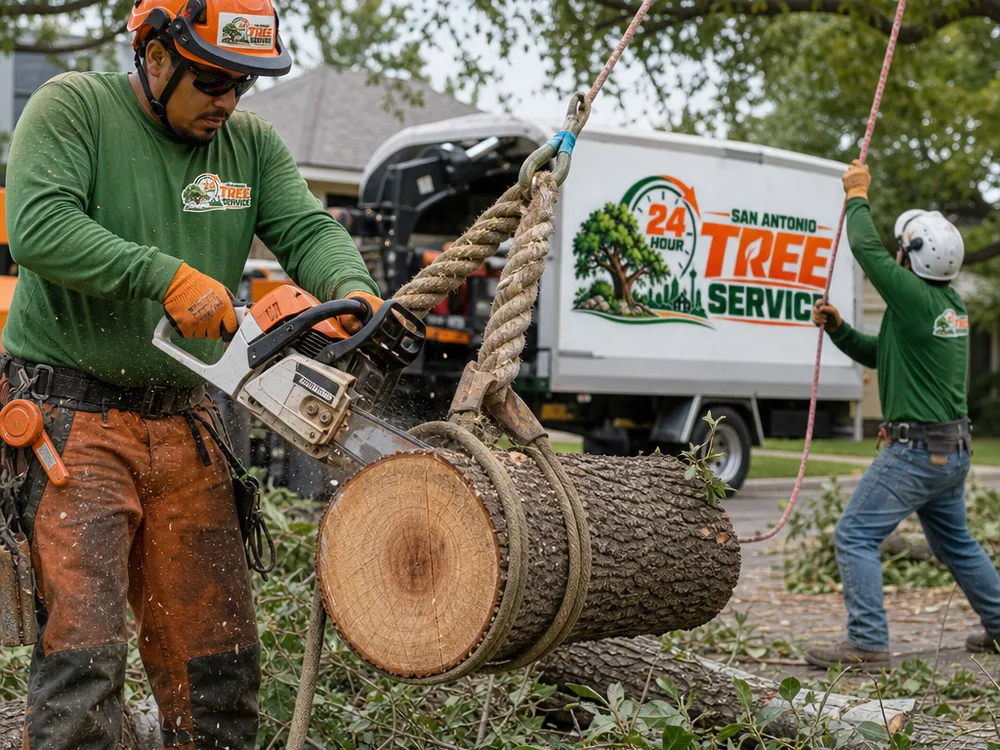
We mark the work zone, position trucks and chipper for efficient loading, and protect sensitive areas when practical. Controlled lowering is used where free-falling limbs would be risky.
Work proceeds methodically, with cut pieces managed to avoid damage. For removals, the canopy is typically reduced first, then the trunk is blocked down in sections.
Brush and wood are removed as agreed. We rake, blow, and leave the area clean so you are not stuck with piles of debris after the crew leaves.
Inspection-Based Pricing
Tree service in San Antonio typically ranges from about $150 to $600 for straightforward trimming, while removals often run $400 to $2,500+, depending on size and complexity. Small trees with open access cost less; large trees over structures or in tight yards cost more.
Final pricing depends on tree height and diameter, health and lean, how much rigging is required, proximity to roofs or lines, access for trucks and chippers, and whether haul-off, stump grinding, or extra cleanup is included. Exact cost is confirmed after an on-site assessment.
Controlled Work, Tidy Property
Answers Before Work Begins
Yes, trees near structures are typically removed in sections using ropes and controlled lowering instead of felling in one piece. The exact method depends on available drop zone, limb size, and what is under the canopy, which is why an on-site look is important before committing to an approach.
Sometimes, depending on the tree, location, and applicable rules, so the safest move is to verify requirements for your property before removal is scheduled. If you are unsure what applies, tell us what you are trying to remove and where it is located, and we will discuss what to check before work begins.
Cleanup is usually priced based on what material is removed and where it goes, so it should be spelled out in the scope. Most jobs include hauling brush and limbs, raking the work area, and blowing off hard surfaces; log hauling, stump grinding, and leaving firewood-length sections can be included or excluded depending on your preference.
Scheduling depends on demand and severity, but storm calls are prioritized based on safety issues like hanging limbs, trees leaning toward structures, and blocked driveways. If a tree is actively threatening a structure or access, share that detail when you reach out so we can triage appropriately.
If the tree is structurally sound, targeted pruning can often address clearance, deadwood, and weight distribution. Removal is usually the better choice when the tree is dead or failing, has severe damage, or has a high likelihood of dropping large wood where it can hit a roof, vehicle, or pedestrian area.
Yes, our crews are insured, and we are happy to confirm coverage details when you book. Insurance matters in tree work because property damage risk increases when cutting and rigging happens near roofs, fences, and utility drops.
Plan the Work Safely
Tell us what is going on with the tree and what you want the finished area to look like. We will confirm the safest approach, provide a clear scope, and schedule the work.