Hazard-first decisions
We focus on what is actively failing: broken leaders, split trunks, uprooted root plates, and heavy hangers. The plan is built around controlled lowering and keeping weight off the structure.
Serving San Antonio, Texas & surrounding areas
Emergency Tree Service · San Antonio, Texas
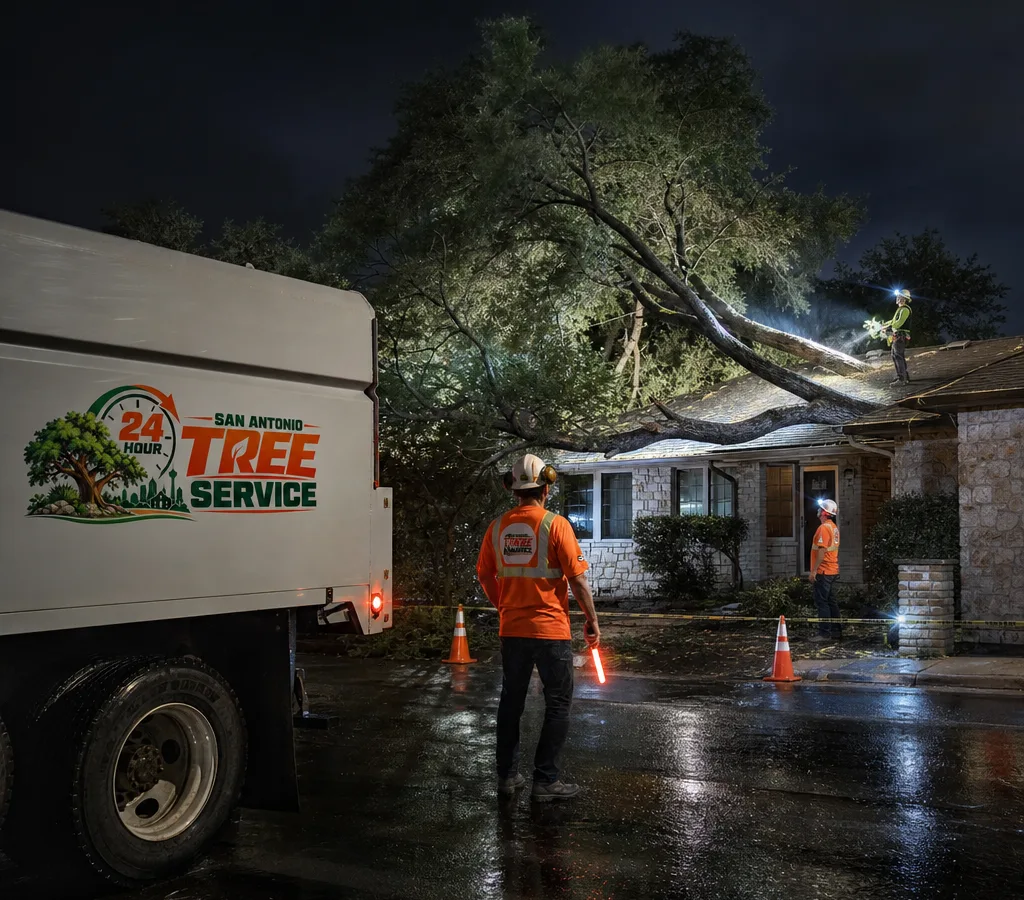
When a tree comes down or starts failing, you need a safe plan fast. We respond quickly across San Antonio to remove hazardous trees and limbs, protect your home, and coordinate around power lines and access issues.
✓Hazard Assessment
✓Controlled Rigging
✓Property Protection
✓Cleanup Options
Know When Waiting Is Unsafe
Emergency tree removal is for situations where waiting increases the chance of property damage or injury. In San Antonio, that often means storm winds snapping large limbs, saturated ground loosening root plates, or trees splitting at the trunk and drifting toward a roof, fence, or driveway.
You should treat it as an emergency when:
If a limb is only brushing the roof or you are dealing with routine clearance, that is usually scheduled work. But when the structure of the tree has changed, the goal is immediate hazard reduction: make the area safe, prevent further damage, and remove or stabilize what is actively failing.
If you are comparing providers for any type of removal, tree removal in San Antonio still comes down to the same fundamentals: safe rigging, controlled lowering, and a crew that can work around tight access without causing a second problem.
Protect People and Control Access
Start by creating distance and controlling access. Keep people and pets out of the fall zone, and avoid parking or walking under hanging limbs. If the tree is touching any overhead line, treat it as energized and stay back.
Avoid these common mistakes during an emergency:
What helps us move faster when we arrive:
Our crew's first priority is making the site safe. We establish a drop zone, identify hazards such as tension wood, compromised trunks, and nearby lines, then choose the removal method that limits impact to your home and landscaping.
Controlled Work Around Real Hazards
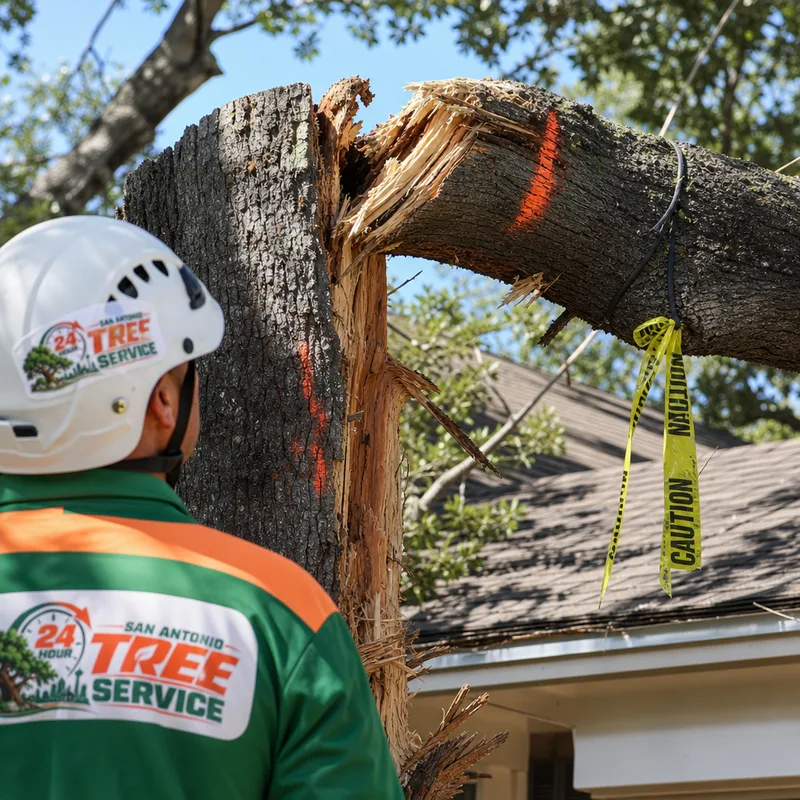
We focus on what is actively failing: broken leaders, split trunks, uprooted root plates, and heavy hangers. The plan is built around controlled lowering and keeping weight off the structure.
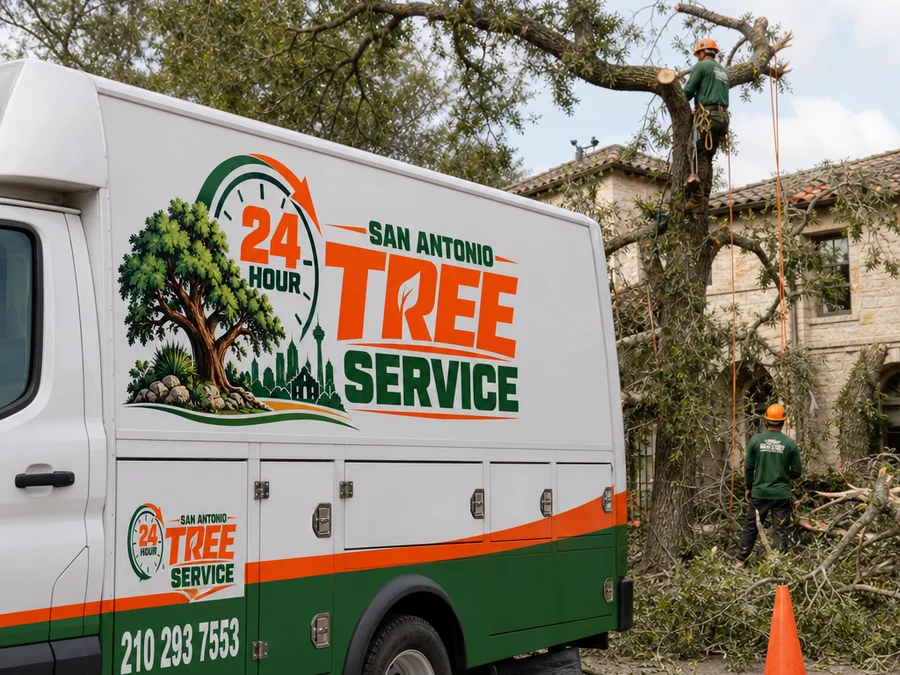
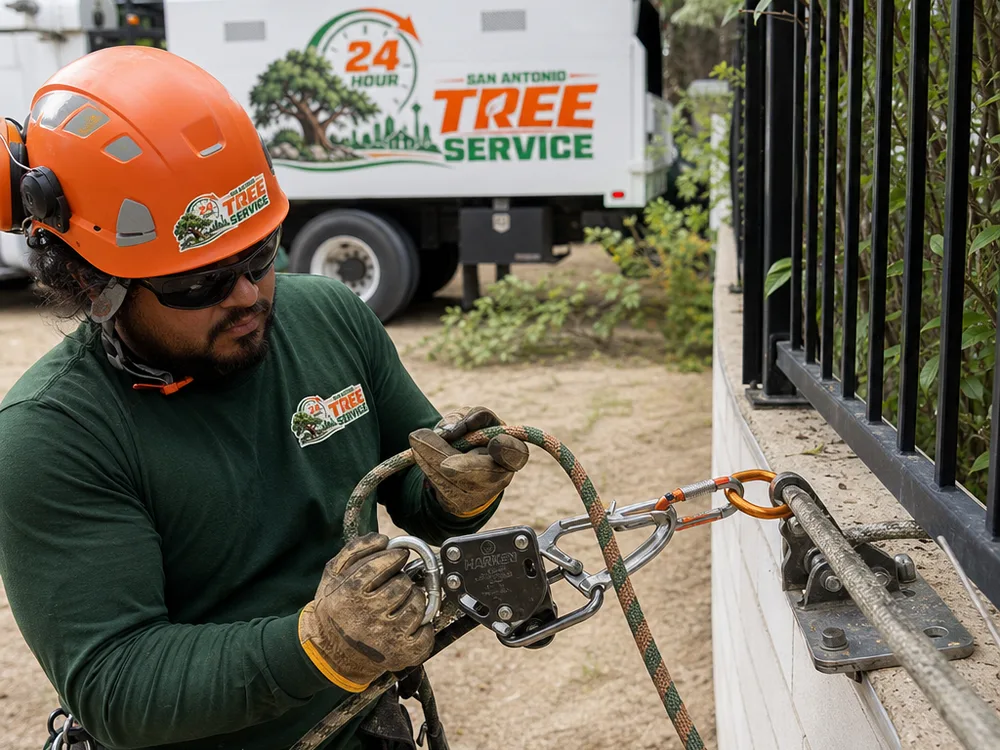
Many San Antonio properties have fences, narrow side yards, and overhead clearance issues. We use ropes, blocks, and friction devices to lower wood in sections instead of dropping it.
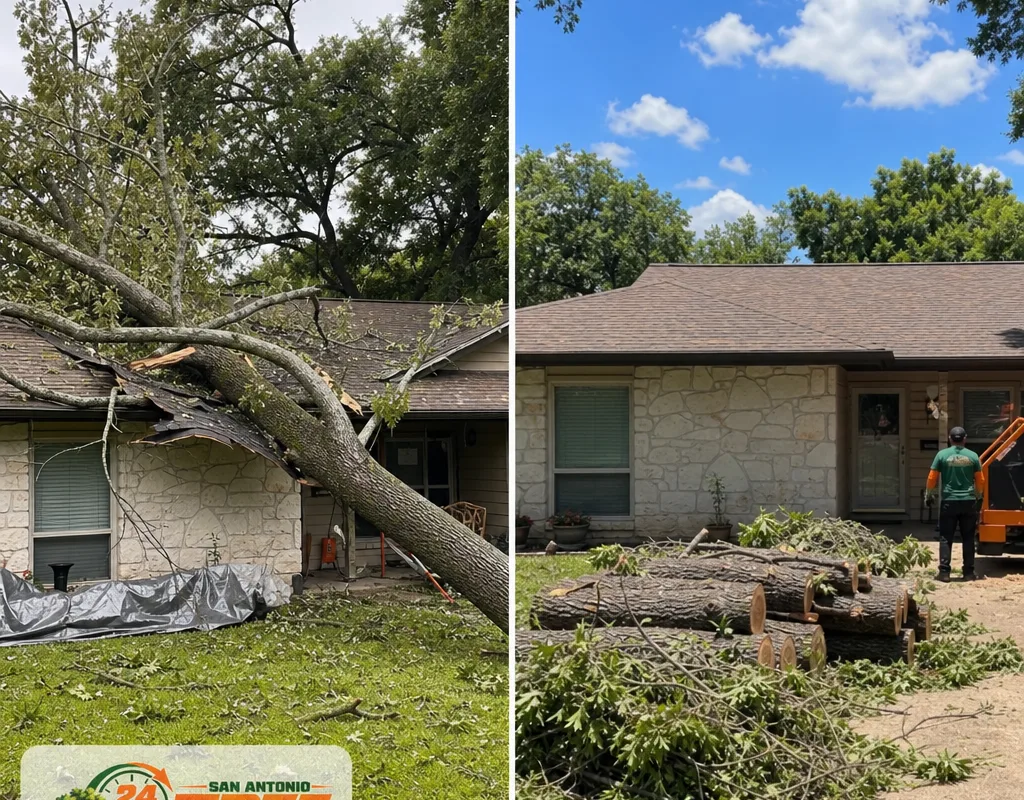
When a tree is on a roof, we avoid sudden shifts that can worsen damage. We remove weight in a sequence that reduces loading and keeps debris from sliding into gutters, vents, and weak points.
If a tree is involved with electrical lines, we keep a safe perimeter and coordinate the work so removal does not put the crew or your property at added risk.
You get a written scope that explains what is being removed, what stays, and how debris will be handled, so expectations are clear before any cutting starts.
Assessment to Final Walk-Through
Every step is planned around immediate hazard reduction, controlled handling, property protection, and a safe finish.
We evaluate lean, cracks, root movement, hang-ups, and targets like roofs, vehicles, and walkways. Then we set a drop zone and control access so no one is under the work.
We identify tension and compression in the wood, pick anchor points, and decide whether to limb first, top down, or remove sections from the failure point outward.
Wood comes down in manageable pieces using rigging where needed. If the tree is on a structure, we reduce weight in stages to avoid shifting and secondary damage.
We stack, chip, or haul debris based on what you choose and what access allows. If a stump remains, we flag it clearly so it is not a trip hazard during recovery work.
We review what was removed, point out any remaining risks such as cracked unions or compromised adjacent limbs, and leave the area safe for your next steps.
Inspection-Based Pricing
Emergency tree removal in San Antonio typically ranges from $500 to $2,500+, depending on size, complexity, and time of day. A small downed tree in an open yard may land closer to $500 to $900, while a large tree on a roof or tangled in other trees often runs $1,200 to $2,500+ because it requires sectional rigging and careful load management.
Final price depends on trunk diameter and height, access such as fences and narrow side yards, proximity to structures and lines, how much cleanup and hauling you want, and whether equipment can reach the drop zone. The exact cost is confirmed after an on-site assessment of the hazards and access.
Rigging, Clearance, and Recovery
Answers for Urgent Situations
Response time depends on current storm volume and travel conditions, but we prioritize situations involving structures, blocked driveways, and immediate safety hazards. When you reach out, we will ask a few quick questions about where the tree is resting, whether anyone is trapped, and whether any lines are involved so we can triage appropriately.
If a tree is contacting an overhead line, assume it is energized and keep everyone back until it is safe to approach. We can assess the situation on arrival, but line clearance and de-energizing may be required before removal work can proceed, depending on what the tree is touching and how the lines are affected.
Yes, the safest approach is usually sectional removal that takes weight off the roof in a controlled sequence. We typically start by reducing limbs and load points, then work back to the trunk so the tree does not roll, slide, or suddenly shift into weaker parts of the structure.
For most emergency removals, it helps if an adult can provide access and approve the scope, especially if gates are locked or vehicles need to be moved. If you cannot be present, we can often work from photos and a clear written scope, as long as we can safely access the hazard area.
Often, yes, as long as access allows and you want full cleanup. In heavy storm events, some customers choose hazard removal first—getting the tree off the roof or driveway—and schedule haul-off and fine cleanup as a follow-up once emergency demand settles.
The biggest cost drivers are tree size, whether it is on a structure, the need for rigging, and access constraints like fences and narrow side yards. Time of day and the amount of cleanup you want also matter because emergency work can require more crew hours and specialized handling.
Yes, clearing access is a common emergency request, especially after storms when a large limb or trunk blocks a driveway. We typically cut and remove sections to open a safe path first, then complete the remaining removal and cleanup based on your priorities and what the site allows.
Reduce the Hazard Safely
Tell us what happened and where the tree is resting. 24 Hour Tree Service San Antonio will assess the hazards, explain the safest removal approach, and provide a clear written scope so you can move forward with confidence.