Storm-damaged and hanging limbs
Broken tops, split trunks, and suspended limbs can shift without warning. We stabilize the work zone and remove the load in the safest order.
Serving San Antonio, Texas & surrounding areas
Tree Removal Service · San Antonio, Texas
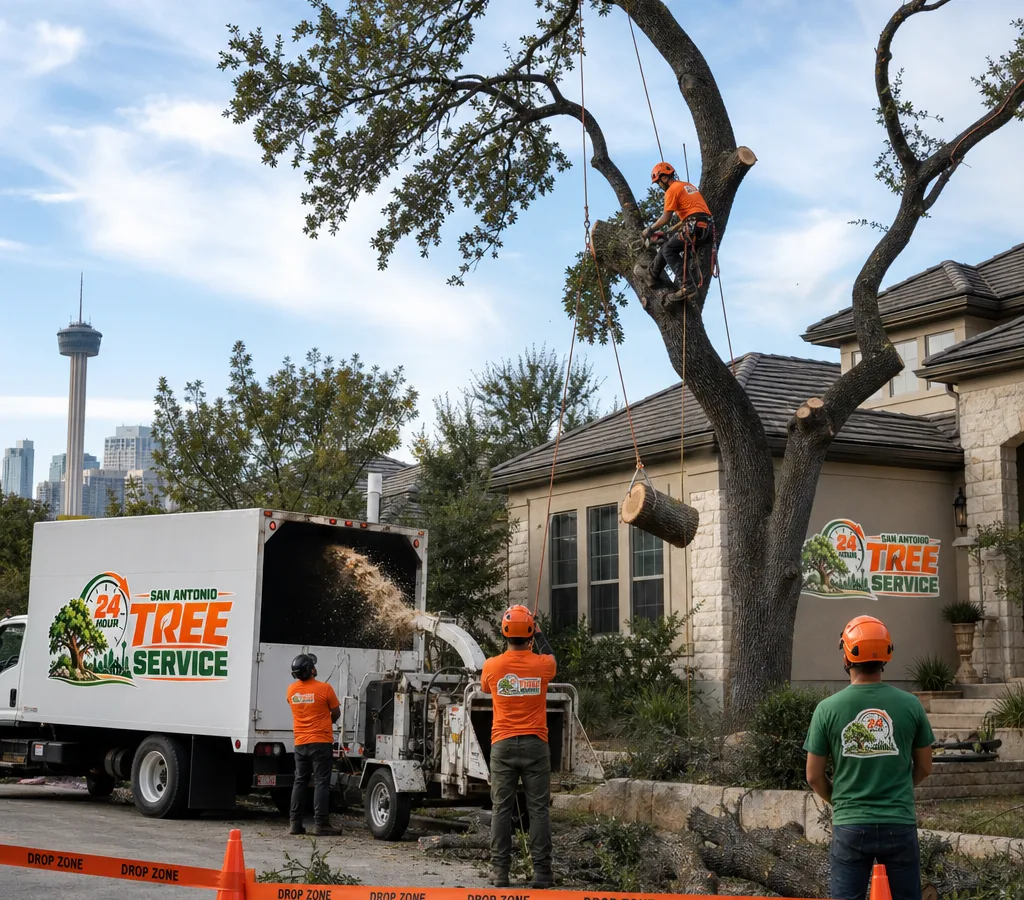
When a tree is risky, storm-damaged, or simply in the wrong place, you need a crew that can remove it cleanly and control every cut. 24 Hour Tree Service San Antonio handles removal planning, safe felling or sectional take-down, hauling, and full cleanup so your yard is usable again.
✓On-Site Planning
✓Controlled Cutting
✓Property Protection
✓Full Cleanup
Recognize the Risk
A tree can be healthy and still need to come down if it is too close to a roofline, pushing up hardscape, or growing into power lines. Other times, removal is urgent after wind or storm damage, or when a trunk splits and the tree becomes unpredictable.
Our tree removal service San Antonio homeowners reach for most often falls into a few situations:
If you are not sure whether removal is necessary, a site visit helps. We look at the lean, the canopy weight, visible defects in the trunk, access for equipment, and what is underneath the work area—rooflines, fences, and utilities. Then we recommend the safest way to take the tree down and explain what the cleanup will look like.
Control Every Cut
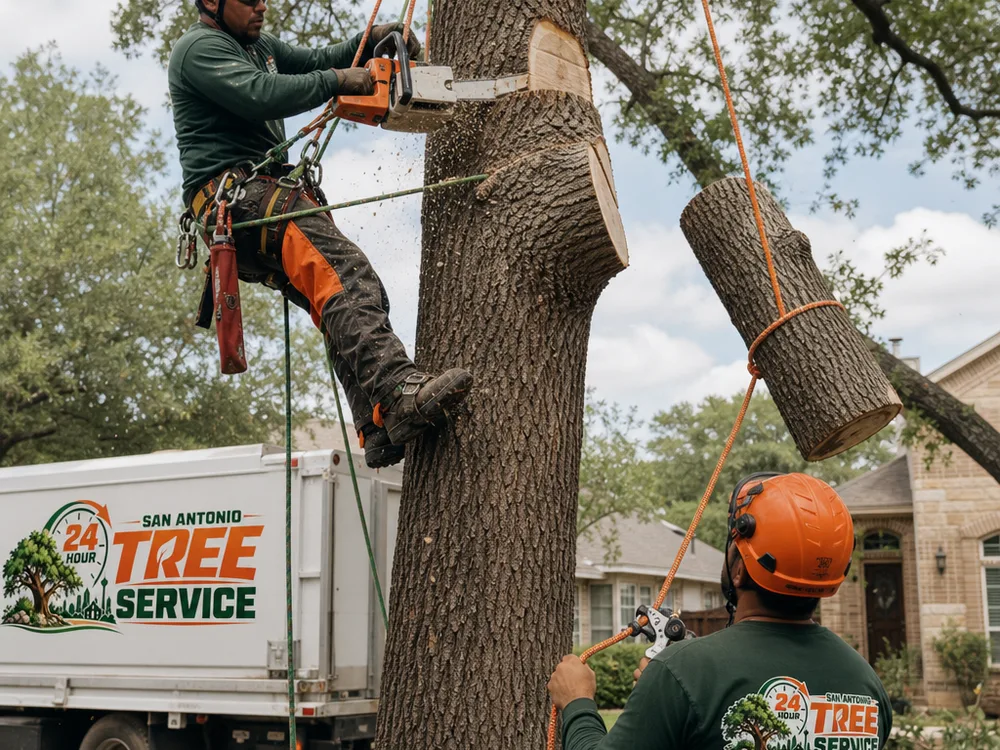
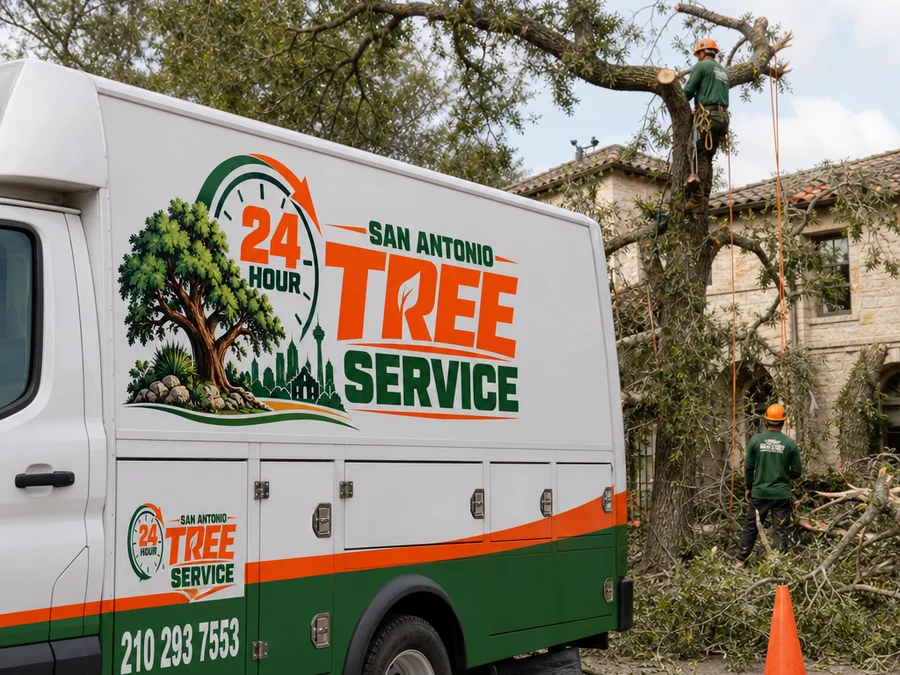
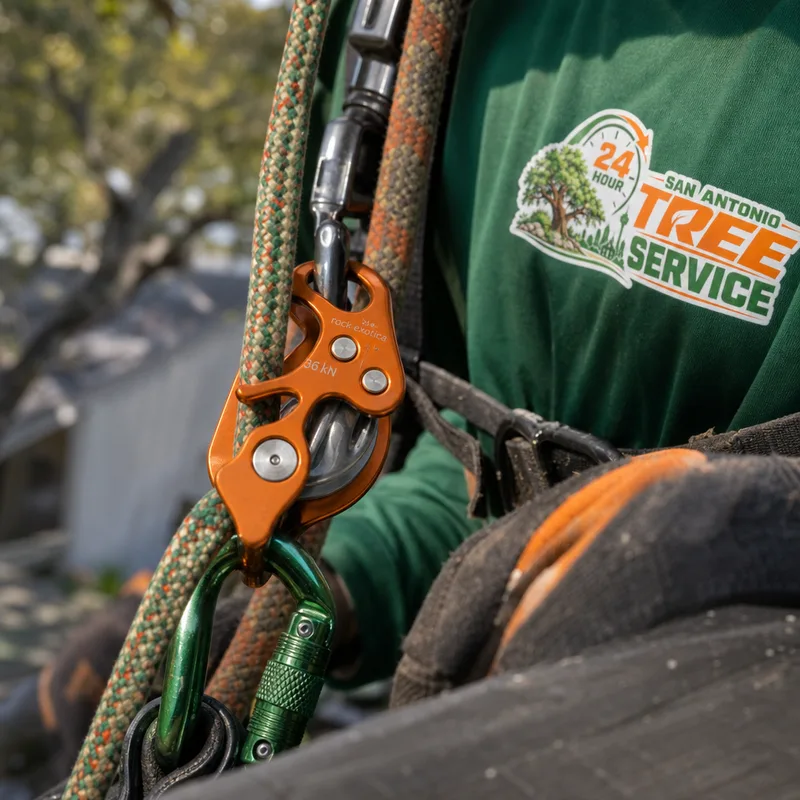
Tree removal is more than cutting at the base. In neighborhoods with tight side yards, overhead lines, or landscaping you want to keep, the job is usually a sectional removal: the crew climbs or uses lift access to remove the canopy in pieces, lowers wood with ropes when needed, and keeps debris inside a planned drop zone.
On a typical project we:
If the tree is near overhead lines, we plan the cuts and the drop so nothing swings or falls into the line. If a tree is close to a roof, we remove weight in small sections and keep pieces tied in until they are lowered clear. This is the difference between a quick chop job and a removal done with control.
Removal Built Around the Site
Broken tops, split trunks, and suspended limbs can shift without warning. We stabilize the work zone and remove the load in the safest order.
When there is no clear felling lane, we use sectional take-down and controlled lowering to keep debris inside the target area.
We plan the cuts around structures and boundaries, protecting surfaces and keeping pieces from swinging into property lines.
Lean, soil heaving, and root plate movement change how a tree holds load. We choose a removal method that avoids sudden barber-chair splits or uncontrolled fall.
Brush and wood are hauled off, and the area is raked and blown. You should not have to spend your weekend finishing the job.
Assessment to Haul-Off
Each removal follows a controlled sequence built around site conditions, property protection, and a clean finish.
We inspect the tree, nearby structures, and any overhead or underground considerations. You get a clear removal plan and what will be hauled away.
We set a work zone, stage equipment, and protect vulnerable areas like fences, windows, AC units, and landscaping at the edge of the drop zone.
If the site allows, we fell the tree into a clear lane. If not, we remove it in sections using climbing, rigging, and lowering techniques.
Brush and wood are loaded and removed. We rake and blow the area to leave it clean and easy to use.
Inspection-Based Pricing
Tree removal service in San Antonio typically ranges from about $350 to $2,500+, with small, straightforward removals at the low end and large trees near structures or power lines at the high end. Many mid-sized removals in accessible yards land around $700 to $1,500.
Final pricing depends on tree height and diameter, species and wood density, lean and defect risk, access—gates, slopes, and tight side yards—proximity to roofs or lines, and how much hauling is required. Your exact cost is confirmed after an on-site inspection and a written scope of work.
From Rigging to Haul-Off
Built for San Antonio Properties
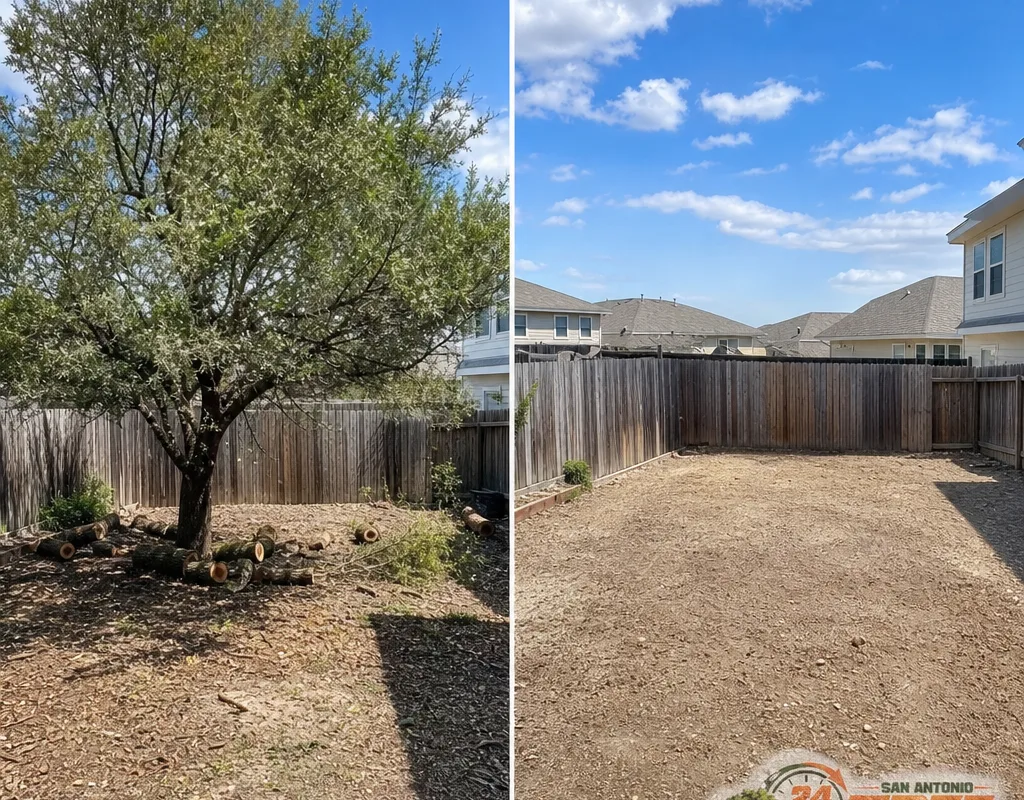
San Antonio properties often have mature shade trees close to homes, garages, and backyard fences, especially in established areas where lots can be tighter. That makes controlled sectional removal and debris management more important than raw cutting speed.
Heat and long dry stretches can also stress trees and reveal weak unions and deadwood over time. If you are seeing canopy dieback, sudden limb drop, or cracking at a junction, it is worth getting the tree assessed before the next wind event.
If your tree is interacting with overhead utilities, removal planning matters even more. In some cases the safest path is to coordinate around the line location and keep all cuts and swings well clear. Our citywide tree removal overview covers common scenarios and what to expect when scheduling work.
Answers Before Work Begins
Scheduling depends on crew availability and the complexity of the job, but many removals can be set up quickly once we confirm access and hazards at the site. Storm-damaged trees, hanging limbs, and trees threatening a roofline are prioritized because conditions can change fast.
In most cases, yes for the start of the job, so we can confirm the exact tree or trees, the haul-off plan, gate access, and any areas you want protected. After setup, many homeowners step inside while the crew works, as long as we have a clear plan for entry and parking.
Yes, when the site requires it we remove the tree in sections and lower pieces with ropes instead of dropping them. The key is a planned drop zone, controlled rigging, and staging brush so it does not crush beds or push against fencing.
The biggest drivers are tree size, proximity to structures or overhead lines, and access for equipment and hauling. A large tree over a roof typically costs more than a similar tree in an open yard because it requires slower sectional work and controlled lowering.
Haul-off can be included so you are not left with piles of brush and rounds. During the estimate we confirm what is staying and what is leaving, then we finish with rake-and-blow cleanup so the area is usable.
Often, yes, but the approach depends on how close the limbs are and what clearance exists for safe cutting and lowering. We plan the removal to keep all pieces controlled and away from the line area, and we will tell you up front if the site requires a different coordination plan for safety.
Plan the Removal
Tell us what is going on with the tree and where it sits on your property. We will confirm access, talk through the safest removal method, and provide a clear written scope for your San Antonio tree removal.