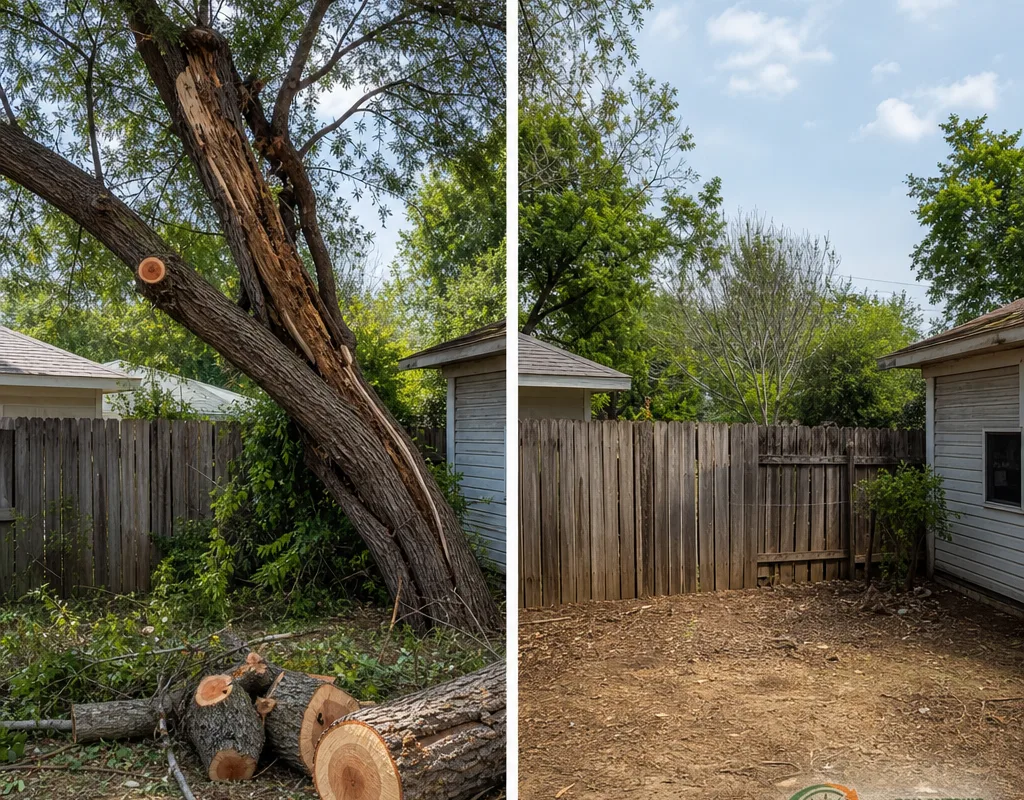
Storm-damaged or split trunks
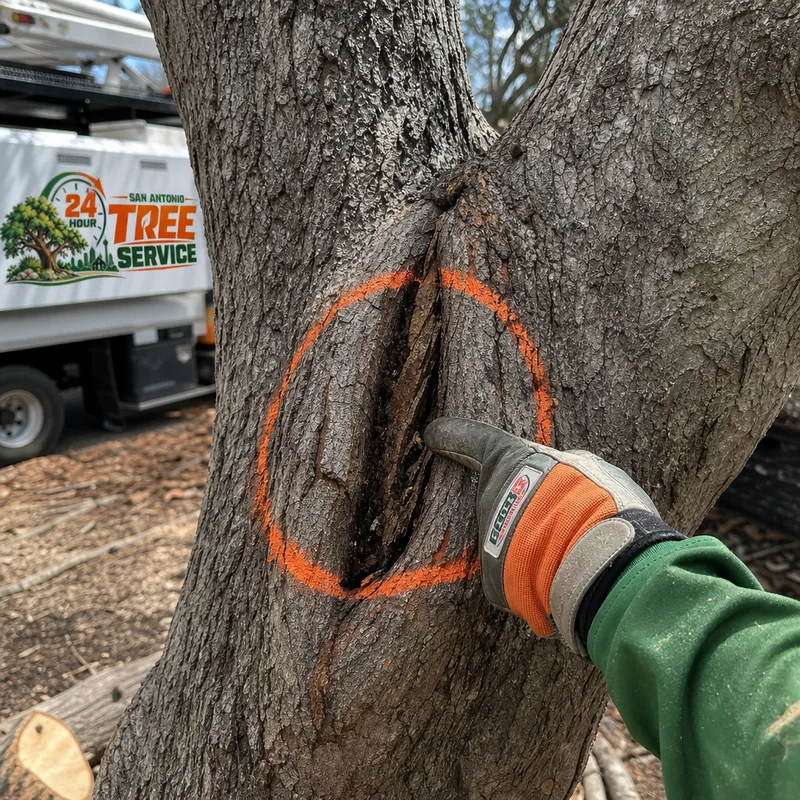
If the trunk is cracked or a main leader has separated, the tree can fail with little warning. Removal is usually safer than attempting to save a severely compromised structure.
Serving San Antonio, Texas & surrounding areas
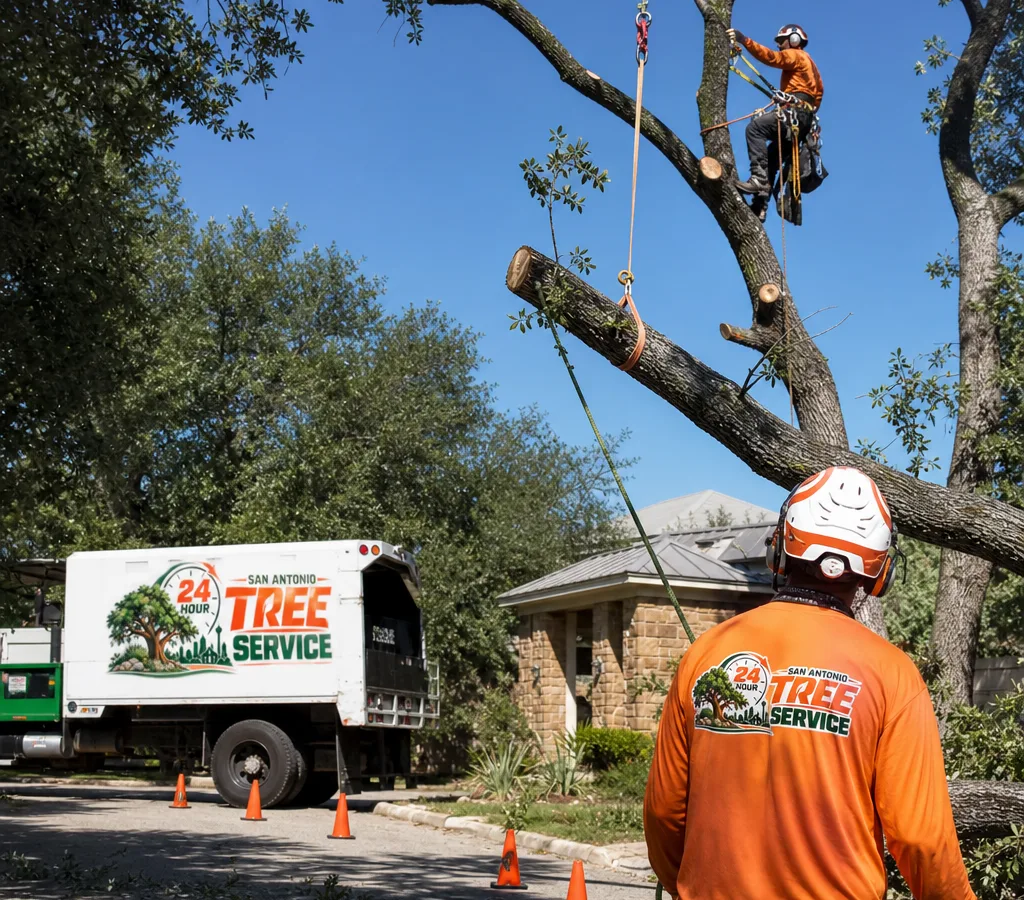
Hazardous Tree Removal Service · San Antonio, Texas
When a tree is leaning, cracked, uprooted, or tangled in lines, the goal is simple: remove the risk without damaging your home, fence, driveway, or nearby trees. Our crew plans the cut, controls every piece on the way down, and cleans up thoroughly once the danger is gone.
✓On-Site Risk Assessment
✓Controlled Dismantling
✓Property Protection
✓Debris Removal
Recognize the Risk
A hazardous tree is one that has a realistic chance of failing and hitting a target. In San Antonio, that target is often a roof, vehicle, neighboring fence line, or overhead utilities. If you are searching for Hazardous Tree Removal, it usually means something changed quickly: a storm pushed the tree over, a limb split, or the trunk started showing new movement at the base.
Common red flags we respond to include:
San Antonio weather can turn a marginal tree into an urgent situation fast, especially when repeated windy days follow rain. The safe approach is to treat it like a controlled dismantle job, not a quick cut-and-drop, and to set a clear drop zone and rigging plan before any saw work starts.
If the main issue is a healthy tree that simply needs clearance or shaping, that is a different scope than hazard mitigation. General removal work that is not strictly hazard-driven should be evaluated as a separate scope.
Controlled From Cut to Ground
Hazardous removals are about control. A cracked stem or storm-torn canopy can behave unpredictably, so we use methods that limit shock loading and keep pieces small and manageable.
What you can expect on a typical hazardous removal:
In older parts of San Antonio where trees grow close to homes, fences, and overhead service drops, controlled dismantling is often the only practical option. If a tree is near overhead lines, keep everyone away and leave it alone until it is assessed on site.
When Removal Is the Safer Choice
If the trunk is cracked or a main leader has separated, the tree can fail with little warning. Removal is usually safer than attempting to save a severely compromised structure.
A new lean paired with lifted soil or visible root plate shifting is a sign the anchoring system is failing, especially after rain-softened ground.
Heavy overhangs with visible deadwood or prior break points can drop without a full-tree failure. Removal is often chosen when defects are widespread.
A partially fallen tree caught in the canopy is unpredictable. These removals require controlled release and a clear exclusion zone on the ground.
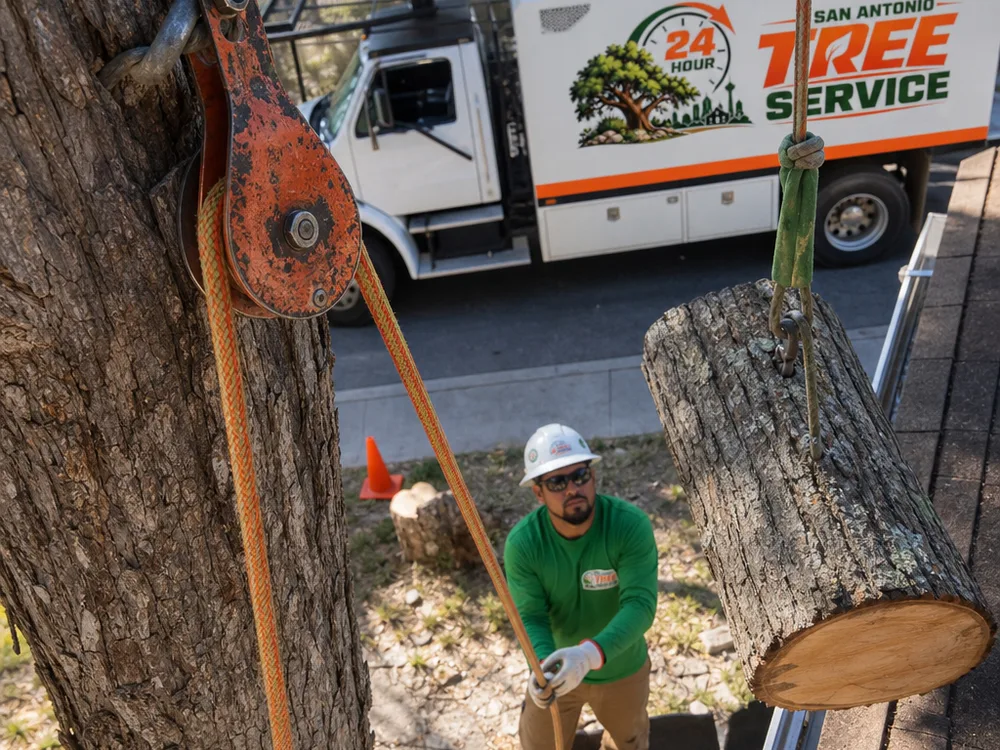
Backyard trees boxed in by fencing, sheds, and neighboring structures often need climbing and rigging to bring wood down safely in small sections.
Recent excavation, trenching, or grade changes can damage roots and create delayed failure. Rapid decline with nearby targets can make removal the safest option.
Assessment to Final Walk-Through
Every stage is planned around stability, controlled lowering, property protection, and a safe, usable site when the work is complete.
We look at the lean, cracks, canopy load, and targets, then explain the removal method. The plan includes where pieces will land and how they will be lowered.
We stage equipment, set an exclusion zone, and protect driveways and landscaping where practical. In tight spaces, the carry-out route is planned before cutting begins.
We remove weight in a safe sequence. Limbs come off first, then trunk sections, using rigging where needed so wood does not swing into structures.
Wood is processed safely on the ground and debris is cleared so the property is usable again. Wood can be left on-site when confirmed during the scope discussion.
We confirm the hazard is resolved, check for remaining hangers or damaged limbs in adjacent trees, and review possible next steps such as stump removal.
Inspection-Based Pricing
Hazardous tree removal in San Antonio typically ranges from about $400 to $2,500+, with small hazardous limb removals often on the lower end and large, high-risk removals near homes, fences, or utilities at the higher end. A crane, complex rigging, tight backyard access, or multiple stems can push pricing higher.
Your final cost depends on tree size and species, how unstable it is, access for equipment, what is underneath it—such as a roof, pool, or lines—and how much debris haul-off you want. The exact price is confirmed after an on-site inspection and a written scope.
Rigging, Protection, and Cleanup
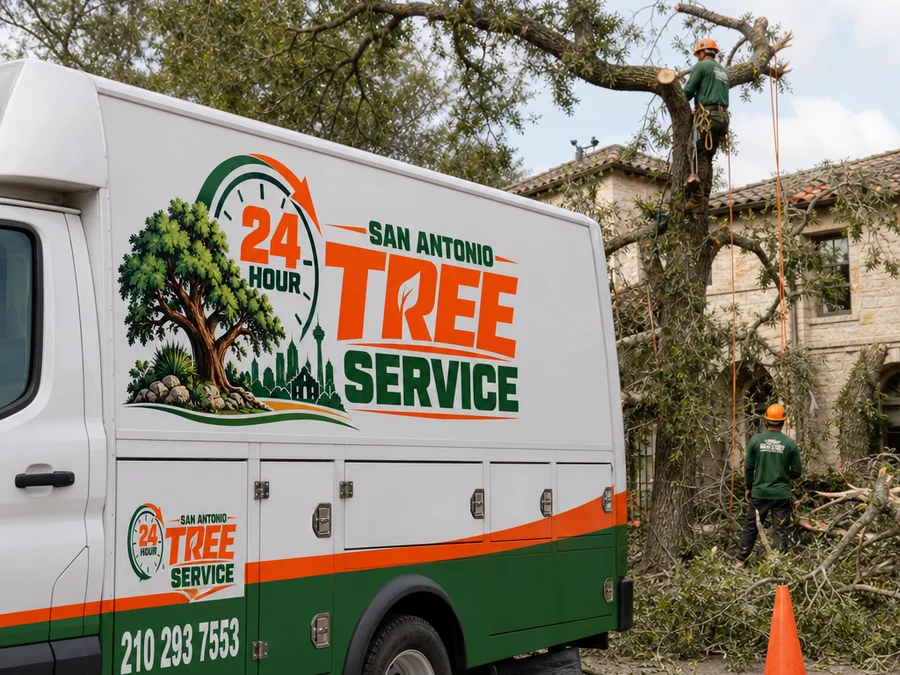
Know the removal plan before any cutting begins.
If a tree looks unstable, the safest next step is an on-site assessment so you know what can be removed safely, what needs rigging, and what the cleanup will include.
Answers Before Removal Begins
A new or increasing lean with soil lifting or root movement should be treated as urgent because it can indicate active root plate failure. A tree that has leaned the same way for years may be stable, but you cannot confirm that from a distance; an on-site check is the right call, especially if the tree can hit a home, vehicle, or public area.
Keep everyone away and do not attempt to cut it, because contact with energized lines can be fatal even without direct touch. The safe approach is to have the situation assessed on site so the work can be coordinated appropriately and the tree can be dismantled with proper clearances.
Yes, if the tree's structure is sound and the risk is limited to specific limbs, selective removal can reduce risk and preserve the tree. If there are multiple structural defects, trunk cracks, or significant root instability, full removal is often the safer and more cost-effective option.
Scheduling depends on severity and demand, but hazard calls tied to active failures, blocked access, or immediate threats are typically prioritized. If you can safely take photos from a distance and describe what is threatened, it helps set the right response level before the on-site visit.
Usually yes, because most hazardous trees are removed by dismantling them in sections and carrying or lowering debris through the safest route. Limited access through gates, narrow side yards, or fences is often workable, but it can change the method and price.
Debris handling is part of the scope and can range from full haul-off to leaving cut rounds or stacked wood where you want it. Decide up front what you want kept and where it should go so the crew can stage the job safely.
Hazardous tree removal addresses the above-ground risk first, and stump work is a separate step that can be added if you want the area regraded or replanted. Mention it during the estimate so the scope is written clearly.
Plan the Safe Removal
Tell us what you are seeing and what the tree could hit. 24 Hour Tree Service San Antonio will assess the risk, explain the safest removal method, and provide a written scope for hazardous tree removal in San Antonio.