Emergency limb and hanger removal
Cutting and lowering broken limbs that are suspended in the canopy or resting on a roof, fence, or vehicle. Hangers are one of the most common causes of secondary damage after a storm.
Serving San Antonio, Texas & surrounding areas
Storm Damage Tree Service · San Antonio, Texas
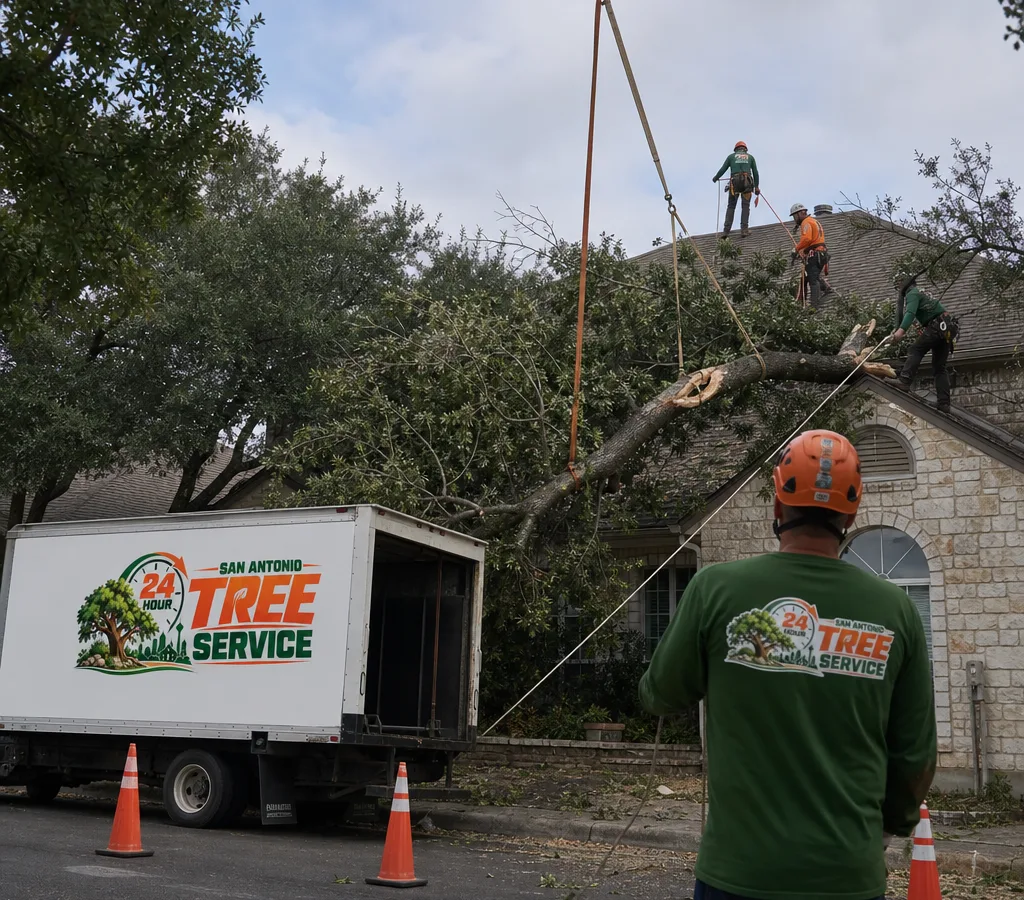
When a tree fails after high winds or heavy rain, the priorities are safety, access, and preventing more damage. Our crew handles urgent removals, hazard cutting, and cleanup across San Antonio with a clear plan before any saw work starts.
✓Hazard Assessment
✓Controlled Rigging
✓Access Clearing
✓Debris Haul-Off
Safety Before Cleanup
Storm damage tree removal starts with making the area safe. After a storm, treat any downed or leaning tree as unstable, especially if it is tangled in other limbs or partially uprooted.
Do first
Then get a professional assessment
A damaged tree can hold stored tension, split at the trunk, or be supported by the structure it hit. Safe storm work often requires sectional dismantling, controlled lowering with rigging, and a plan for where heavy wood lands.
24 Hour Tree Service San Antonio responds throughout the city for storm-damaged removals and hazardous limb work. General removals beyond storm events can be handled through standard scheduling and non-emergency takedowns.
Urgent Work, Clearly Scoped
Cutting and lowering broken limbs that are suspended in the canopy or resting on a roof, fence, or vehicle. Hangers are one of the most common causes of secondary damage after a storm.
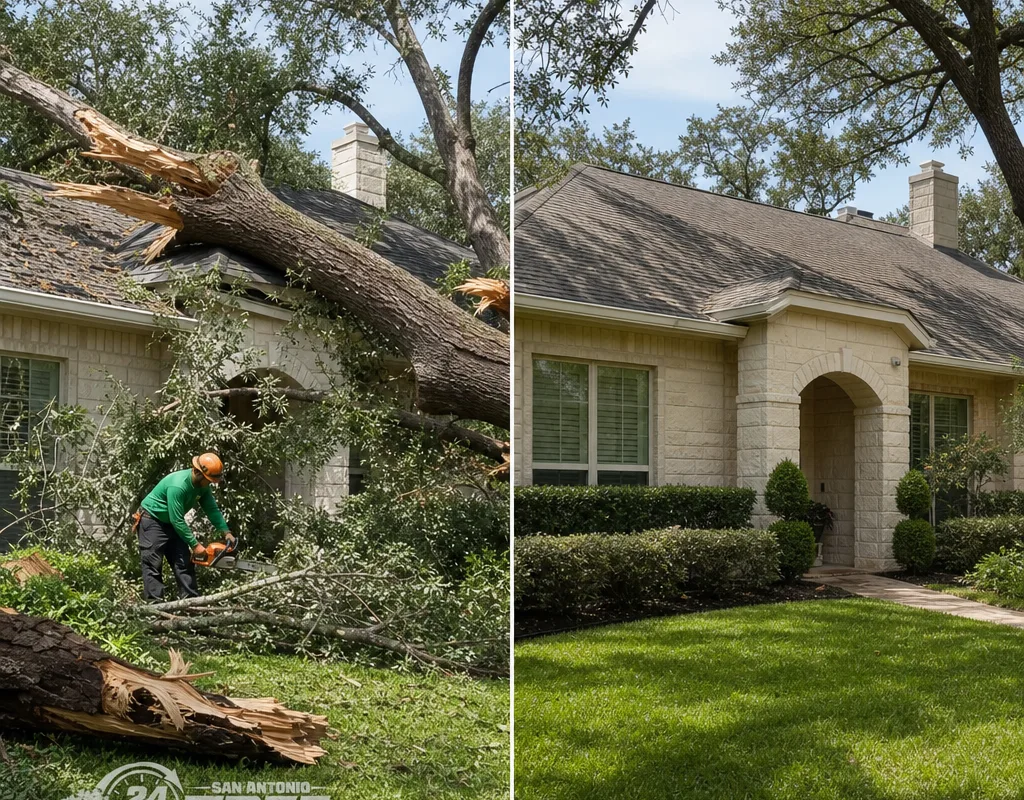
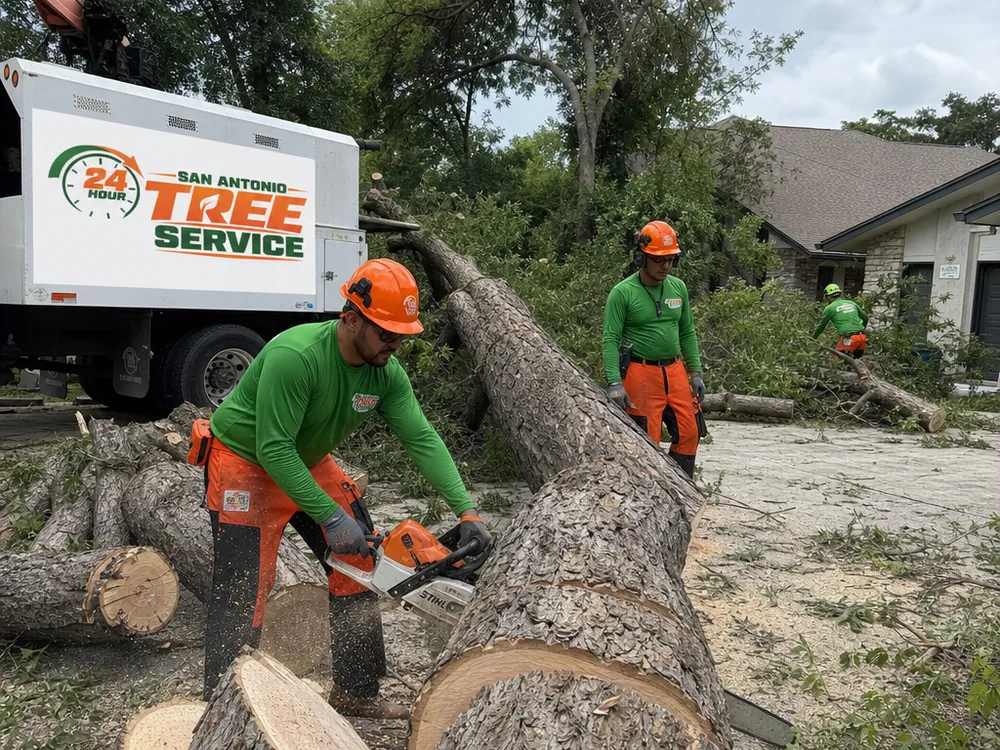
When the trunk is split, the root plate has lifted, or the tree has lost structural integrity, removal is often safer than trying to save it. We dismantle the tree in sections when needed.
Same-day clearing for downed trees across driveways, alleys, and entrances so you can get vehicles out and contractors in.
Loading, hauling, and debris consolidation for limbs, brush, and trunk wood created by the storm and by the removal work itself.
Selective cuts remove cracked, torn, or poorly attached branches and reduce end-weight where storms have already stressed the canopy.
Control Under Unstable Conditions
Storm work is different from routine removals because the tree has already failed or is in the process of failing. Our approach focuses on control and communication.
On-site hazard check: We identify hangers, split leaders, lifted root plates, and any contact with structures. We also choose drop zones and access points for equipment.
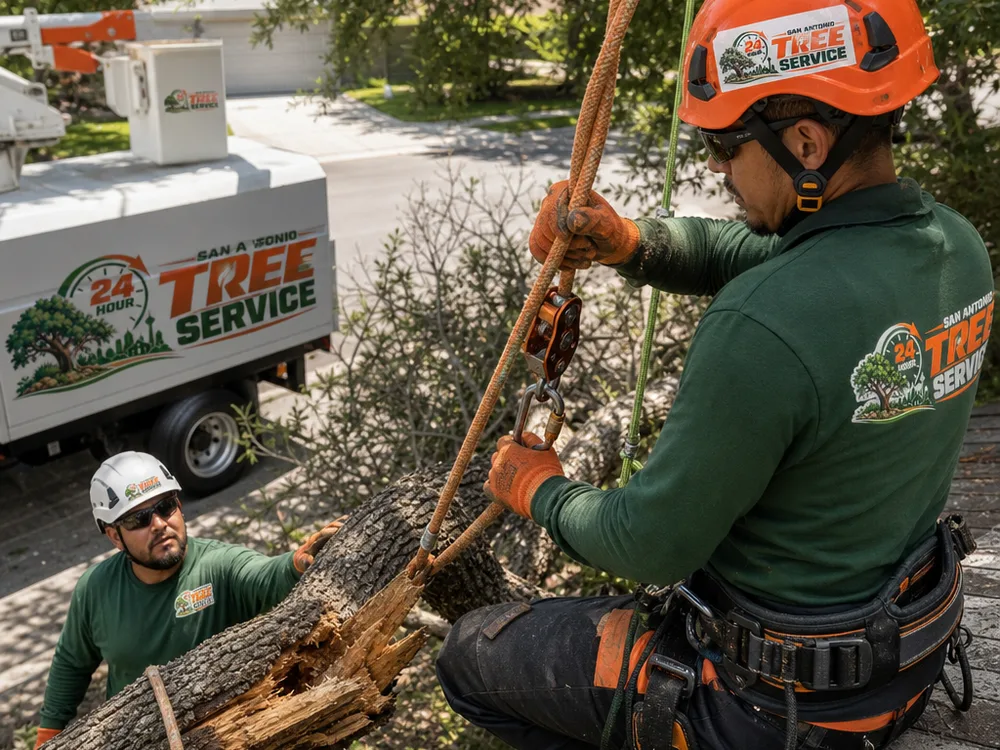
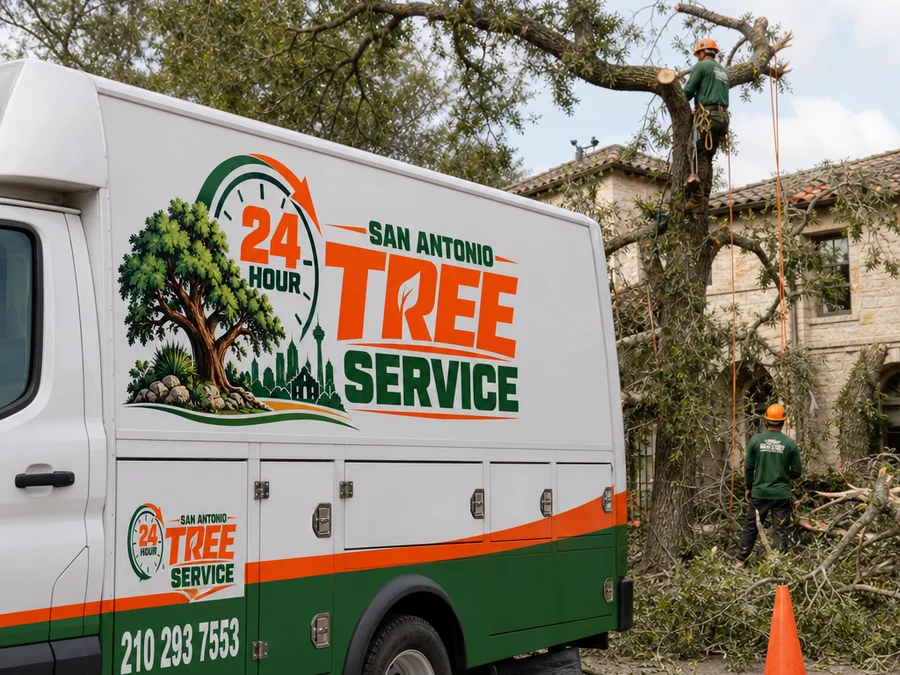
Cut plan and rigging: When pieces must come down over a roof, fence, or landscaping, we use controlled sectional removal. That can include rope rigging, friction control devices, and redirect anchors so pieces are lowered instead of dropped.
Protection and cleanup: We set work zones, keep the area clear, and stage debris so the site is usable again. If a tree has damaged fencing or a driveway approach, we clear it to restore access for repairs.
San Antonio neighborhoods vary significantly in access. In older areas like Alamo Heights and parts of Monte Vista, tight driveways and overhead lines often mean more hand work and controlled lowering. On larger lots in Stone Oak, Shavano Park, and the Far West Side, equipment may be easier to position, but wind-thrown trees can be larger and heavier, changing the rigging and haul-off needs.
Triage to Final Walk-Through
The sequence prioritizes immediate hazards, property protection, controlled removal, and usable access after the work.
Tell us what happened and what is at risk—roof contact, blocked driveway, cracked trunk, or leaning tree. We prioritize true hazards and access-blocking situations.
We confirm what can be safely removed now, what needs rigging, and what equipment access looks like. You get a clear scope before cutting starts.
We remove storm-damaged limbs or dismantle the tree in sections as conditions require, keeping the work zone clear and managing wood weight and swing paths.
Brush and wood are staged for haul-off and the immediate area is cleaned so repairs can begin. Firewood-sized pieces can be cut and stacked when confirmed during scoping.
We review what was removed, what remains, and any visible tree risks nearby so you can plan the next steps for your property.
Inspection-Based Pricing
Storm damage tree removal in San Antonio typically ranges from about $350 to $2,500+, with small fallen-limb removals often on the lower end and large, hazardous removals involving roof contact, rigging, or tight access on the higher end. A straightforward driveway clear can sometimes cost less than a complex sectional removal over structures.
Price depends on tree size and species density, how the tree failed, proximity to structures, crew and equipment needs, haul-off volume, and access through gates or tight lots. Exact pricing is confirmed after an on-site inspection and a written scope of work.
Controlled Removal and Access Restoration
Answers Before Removal Begins
Yes, but it depends on how the load is being supported and where the failures are, so we start with an on-site hazard assessment. Roof-contact removals often require sectional dismantling and rigging to lift or lower pieces without shifting weight onto the structure, and we coordinate the cut plan around safe landing zones and access.
If a tree is touching or tangled with power lines, keep everyone back and involve the utility provider first. Once the lines are confirmed safe and cleared as needed, we can remove the tree using a plan that avoids contact with service drops and maintains safe approach distances.
We prioritize urgent hazards and access-blocking situations and often can schedule same-day or next-available response depending on storm volume. Clearly describe whether there is a blocked driveway, roof contact, hanging limb, or leaning trunk so we can triage correctly.
Yes, haul-off is commonly included as part of storm damage tree removal, and we confirm the debris plan in the written scope. If you want some wood left on-site in firewood-sized pieces, mention it up front so it can be cut and placed where you want.
It depends on structural damage. A split trunk, major leader failure, or lifted root plate often points to full removal, while clean breakage limited to a few limbs may be handled with targeted removal and corrective pruning. We explain what we see on-site and why a given option is safer for the next wind event.
Yes, many San Antonio properties have narrow side yards, tight driveways, or limited street parking, and storm damage can make access even harder. We plan for hand-carry, sectional rigging, and debris staging that keeps walkways usable and reduces risk to fences and landscaping.
Get the hazard assessed before the damage gets worse.
If a storm-damaged tree is threatening your home, blocking access, or leaving hangers overhead, get a professional assessment and a written scope so you know exactly what will be removed, how it will be done, and what cleanup is included.
Restore Safety and Access
Tell us what happened and what is at risk. We will help you choose the safest approach, confirm access and cleanup details on-site, and move quickly to stabilize the situation.