Risk-based pruning decisions
We prioritize structural safety: removing deadwood, reducing leverage on long limbs, and correcting problem growth without over-thinning the canopy.
Serving San Antonio, Texas & surrounding areas
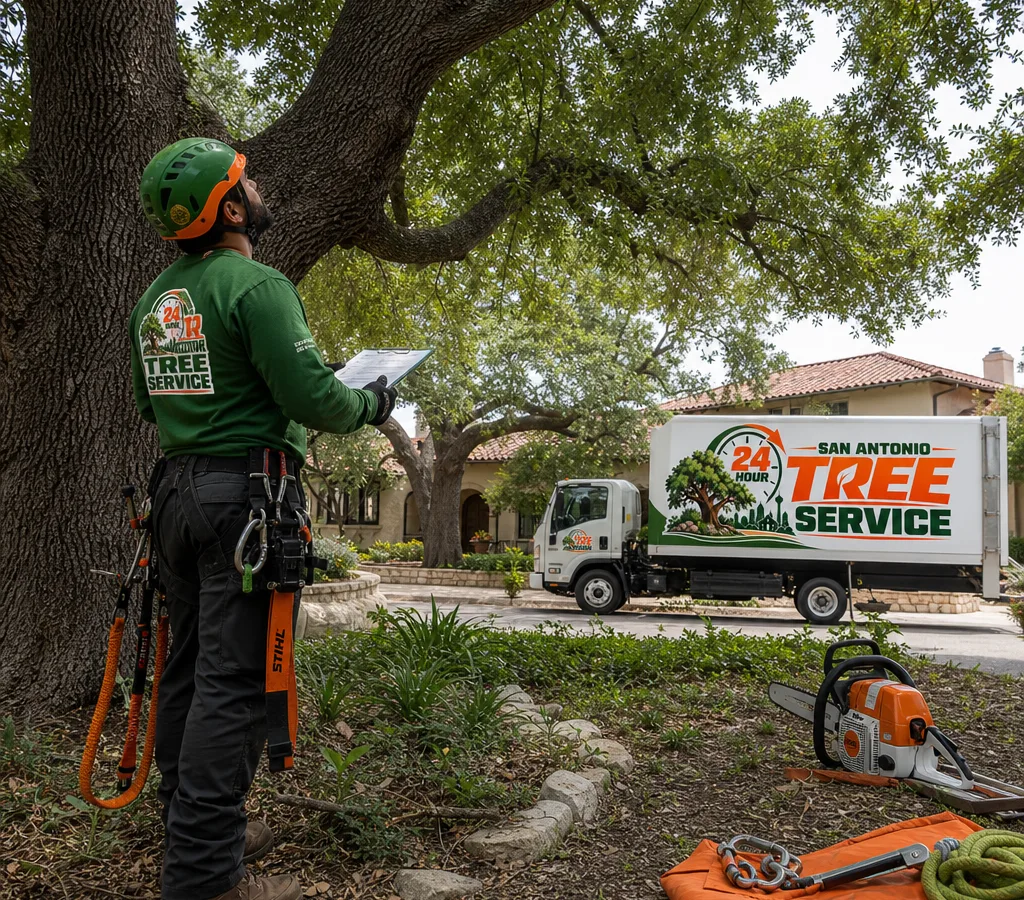
Certified Arborist Services · San Antonio, Texas
Get practical advice, safe work, and a clean finish from a certified arborist. We help homeowners and property managers make confident decisions about their trees, starting with an on-site assessment and a clear scope.
✓Certified Arborist Guidance
✓On-Site Assessment
✓Written Work Scope
✓Property Protection
Assessment Before Action
If you are searching for arborists in San Antonio, you are usually trying to answer two questions: Is this tree safe to keep, and what is the right work to do next? A qualified arborist looks at structure, health, targets such as homes, driveways, sidewalks, and play areas, and access, then recommends the least disruptive option that meets your goals.
At 24 Hour Tree Service San Antonio, our arborist services are built around real-world decisions San Antonio property owners face: managing storm damage risk, keeping limbs off roofs and service lines, correcting poor past pruning, and planning removals when a tree cannot be kept safely. When removal is the right call, it can be quoted as a dedicated scope.
Common reasons people bring in a San Antonio arborist include:
San Antonio weather matters. High winds and heavy rain can expose weak branch unions and previously hidden decay, so we focus on structural defects, weight distribution, and realistic risk reduction—not just how the tree looks when the job is done.
Inspection, Advice, and Scope
A good arborist appointment is part inspection, part planning. Our process is straightforward:
Walk-around assessment. We check the trunk flare, root zone, canopy density, deadwood, and obvious defects like included bark or co-dominant stems. If there are targets nearby, we evaluate the likely consequences if a limb fails.
Practical recommendations. For many properties, the right answer is selective pruning, crown cleaning, or reducing end-weight on long limbs. If the tree is not a good candidate to keep, we explain why and what removal would involve.
A clear scope in plain language. You get a plan that spells out what gets cut, what stays, what gets hauled away, and what access we need, including gate width, driveway use, and parking.
Protection and cleanup. We plan where brush and wood will travel, how we protect turf and beds, and what the final site condition looks like.
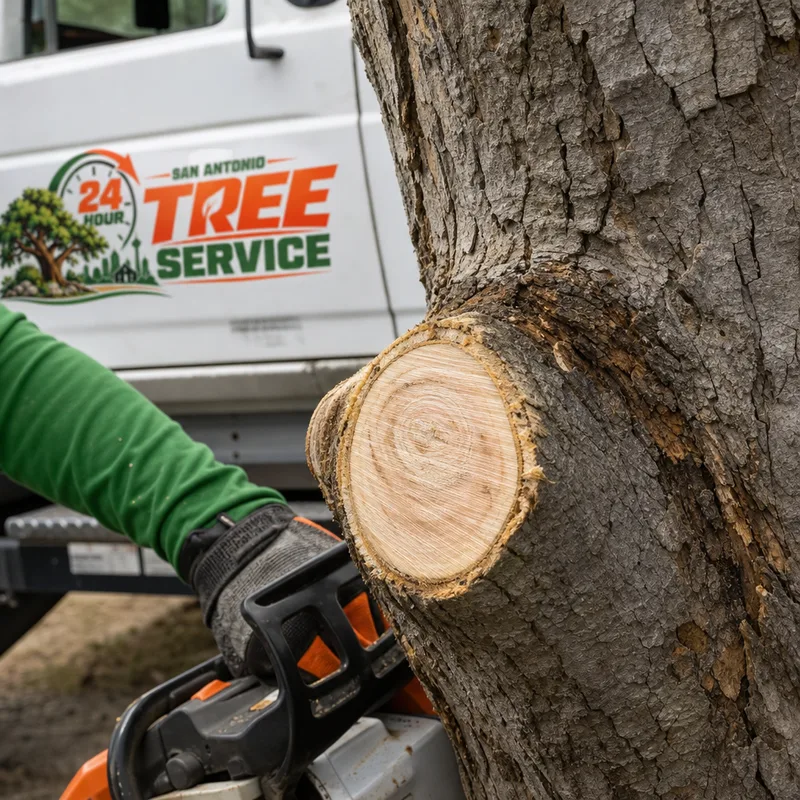
If you are comparing an arborist in San Antonio with a general tree crew, ask who is making the pruning decisions on site. Technique matters. Cuts placed in the wrong spot can create decay pathways, trigger weak regrowth, or shift weight in a way that raises risk later.
Decisions Built Around Risk
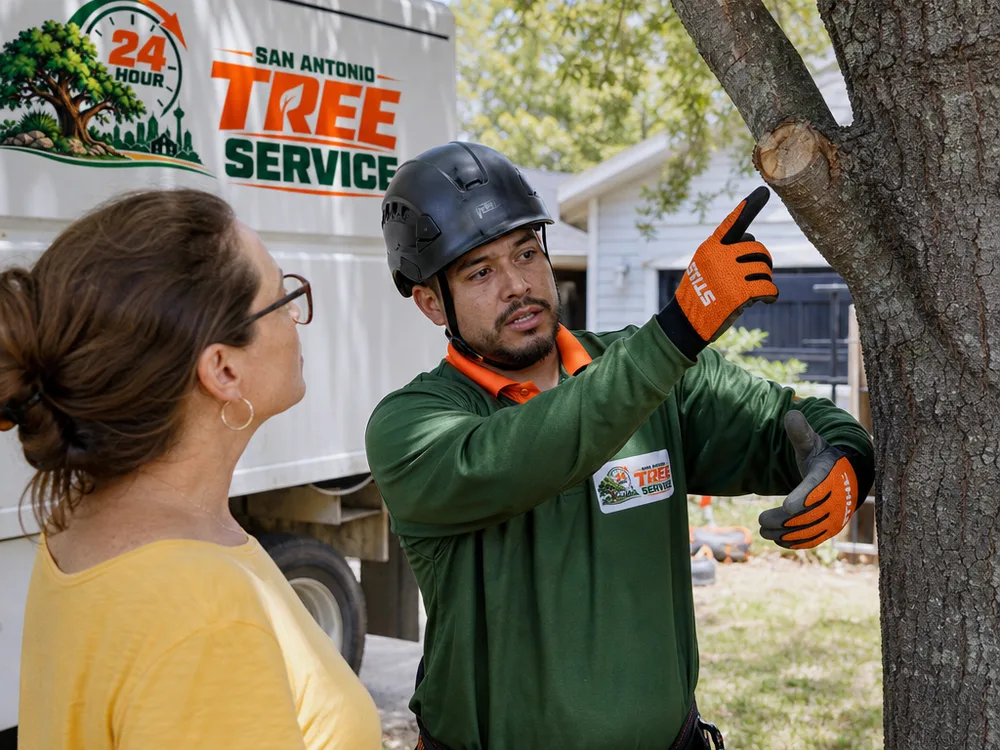
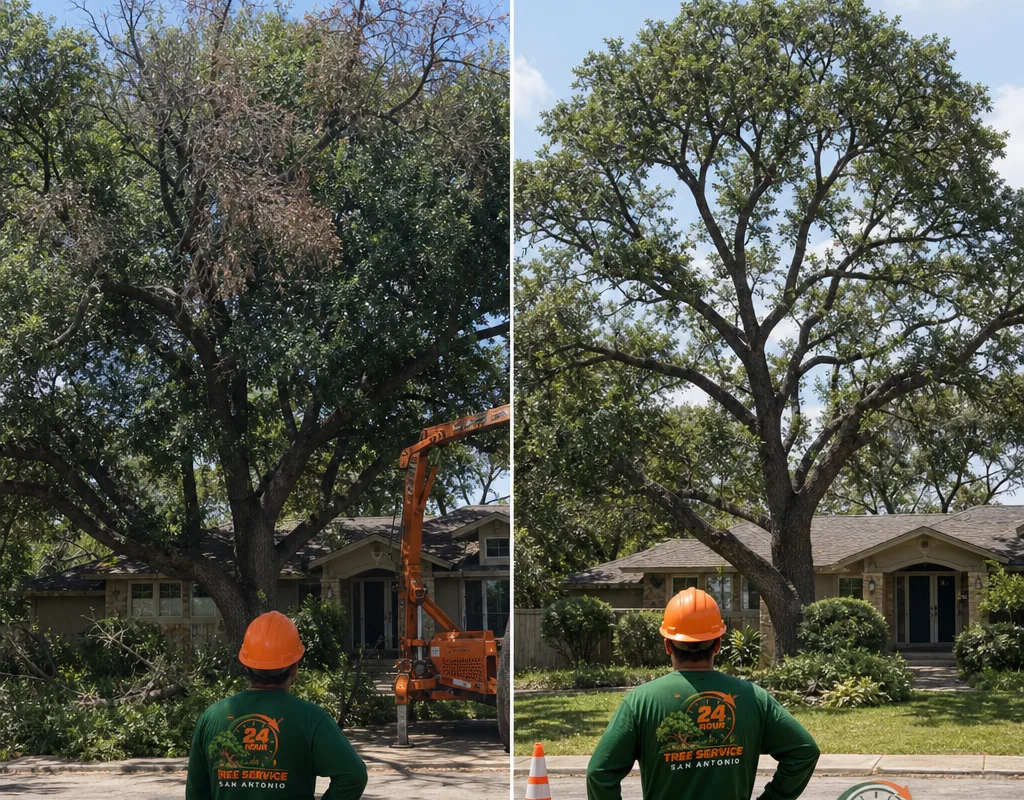
We prioritize structural safety: removing deadwood, reducing leverage on long limbs, and correcting problem growth without over-thinning the canopy.
Roof, driveway, and pedestrian clearance is planned with correct cut placement so the tree can close wounds properly and maintain balance.
After high winds, we can identify hangers, split limbs, and compromised leaders, then stage the work so the property is made safe first.
When the safest option is removal, we explain why, plan the rigging and drop zones, and leave the job site clean.
You get a scope you can approve, share, and schedule around, with access needs and cleanup expectations spelled out.
We plan equipment and brush routes up front to limit impact to turf, irrigation, beds, and hardscape.
Inspection-Based Pricing
In San Antonio, arborist work typically ranges from about $250 to $1,500+ depending on the tree size, the type of work—pruning versus removal planning and execution—and how difficult access is around homes, fences, and overhead lines. Smaller pruning jobs often land in the lower end, while large trees that require rigging, multiple crew members, or complex hazard controls price higher.
Final pricing is driven by tree height and spread, condition such as deadwood, decay, or storm damage, proximity to structures, haul-off volume, and whether stump handling is included. The exact cost is confirmed after an on-site assessment so the scope matches the tree and the property.
Assessment to Cleanup
Every job moves from an on-site assessment to a controlled work zone, an approved scope, and a clean final site.
Tell us what you are seeing and what you want to protect—roof, driveway, sidewalks, tenants, or vehicles. We will set a time to look at the tree in person.
We evaluate health and structure, then propose the right level of pruning or removal. You receive a clear, written scope with access needs and cleanup details.
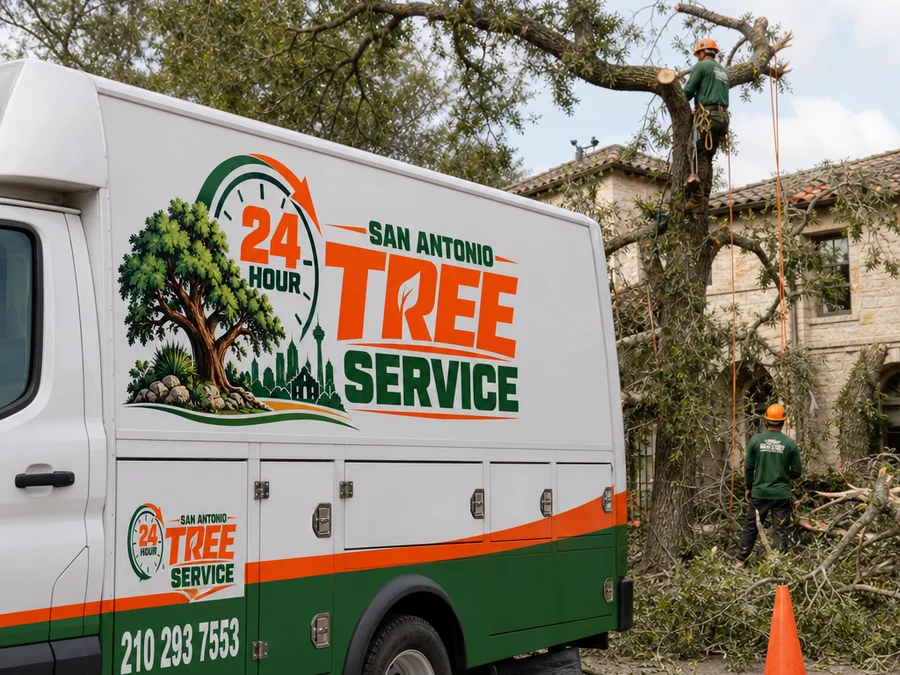
Before cutting starts, we establish work zones, confirm drop areas, and plan rigging routes when limbs must be lowered in tight spaces.
We perform the cuts to the agreed scope, haul debris as specified, and leave the work area tidy so you are not dealing with brush and sawdust afterward.
Work Planned Around the Property
Answers Before Work Begins
If you want a plan based on tree biology and risk—not just cutting—a certified arborist is the safer choice. An arborist evaluates structure, defect likelihood, and targets around the tree, then recommends pruning or removal based on measurable risk and tree response, which matters in San Antonio where wind events can turn weak structure into sudden failures.
Yes, an arborist can assess whether a lean is likely a long-term growth habit or a sign of root plate movement and failure risk. We look for soil heaving, cracks, recent changes in angle, root-zone disturbance, and canopy imbalance, then recommend pruning, monitoring, or removal based on what is found.
A typical assessment includes a walk-around inspection of the trunk, visible roots, and canopy, plus a discussion of targets like roofs, driveways, and pedestrian areas. You should expect clear recommendations, a scope of work describing what gets pruned or removed, and any access or safety constraints that affect how the job is performed.
Scheduling depends on citywide demand after major weather, but triage is usually possible quickly when there are hanging limbs or immediate hazards. When you contact us, describe what is suspended or broken and what it could strike so safety work can be prioritized before full pruning or removal.
Targeted pruning can reduce risk, but only when it is done for structure, not simply to thin the tree out. Removing deadwood, reducing end-weight on long limbs, and correcting poor branch unions can help, while over-thinning can increase stress and produce weak regrowth.
Start with an arborist assessment and treat it as a safety and access problem, not a simple trim. Roof-clearance pruning should maintain balanced weight and avoid stripping one side of the canopy. Anything near overhead lines requires extra caution and a work plan based on the lines present and how close the limbs are.
Get the right tree plan before major work begins.
If you are unsure whether a tree needs pruning, cabling, or removal, an on-site arborist evaluation is the fastest way to get a clear scope and avoid paying twice for the wrong approach.
Make a Confident Tree Decision
Share what you are seeing and what you need protected on the property. We will review the tree in person, explain the options, and provide a clear plan you can approve with confidence.