Clear pruning objective
A good scope names the goal—deadwood removal, canopy thinning, crown raising for clearance, or crown reduction—and avoids vague promises like “trim it up.”
Serving San Antonio, Texas & surrounding areas
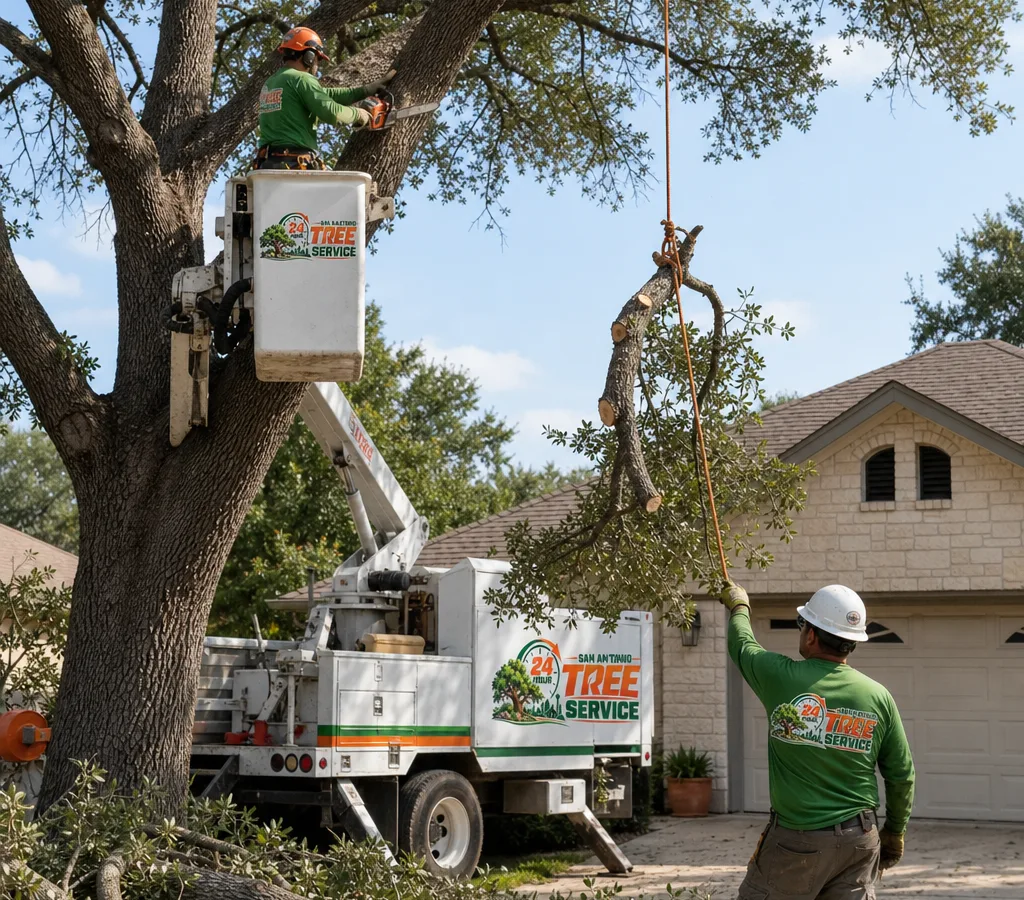
Tree Trimming Pricing · San Antonio, Texas
Get a clear, written estimate based on your tree's size, access, and risk factors, with safe pruning that protects the tree and your property.
✓On-Site Assessment
✓Written Scope
✓Property Protection
✓Cleanup Confirmed
Local Pricing Ranges
Tree trimming cost San Antonio projects typically range from about $250 to $1,200+, depending on the tree and the level of difficulty. A small ornamental trim often lands around $250 to $450, a medium canopy thinning is commonly $450 to $900, and large trees or technical trims near structures and lines can run $900 to $1,800+.
Your final price changes with height and canopy spread, how much needs to be removed, access for crews and equipment, proximity to roofs, fences, or power lines, and whether deadwood or storm damage is involved. The exact cost is confirmed after an on-site look at the tree and work area.
Scope, Risk, and Access
A useful estimate explains both the price and the work included—not just a total with no scope.
When someone searches tree trimming cost San Antonio, they're usually trying to answer two questions: “What's a fair price?” and “What will this crew actually do for that price?” Trimming is not a single, one-size task. Two trees the same height can price very differently depending on risk, access, and how precise the pruning needs to be.
Here are the biggest cost drivers we see around San Antonio homes and small commercial properties:
A reliable estimate will describe the pruning objective—for example, deadwood removal, canopy thinning, crown raising for clearance, or reduction for weight and balance—and state what happens to debris. If you only get a number with no scope, it's hard to compare bids.
Book Your Free InspectionLocal Conditions Matter
Local conditions influence both scheduling and cost.
If you are comparing “apples to apples,” ask each company to confirm the same pruning goals and the same cleanup standard. That's the quickest way to understand why one price is higher.
If the evaluation shows the tree isn't a good trimming candidate, removal may be the safer option; tree removal in San Antonio is typically priced differently because the rigging, haul-off, and stump planning change the scope.
Compare the Entire Scope
A good scope names the goal—deadwood removal, canopy thinning, crown raising for clearance, or crown reduction—and avoids vague promises like “trim it up.”
Look for a description tied to specific limbs or areas, or a percentage guideline discussed on-site. Over-thinning to chase a low price can stress the tree.
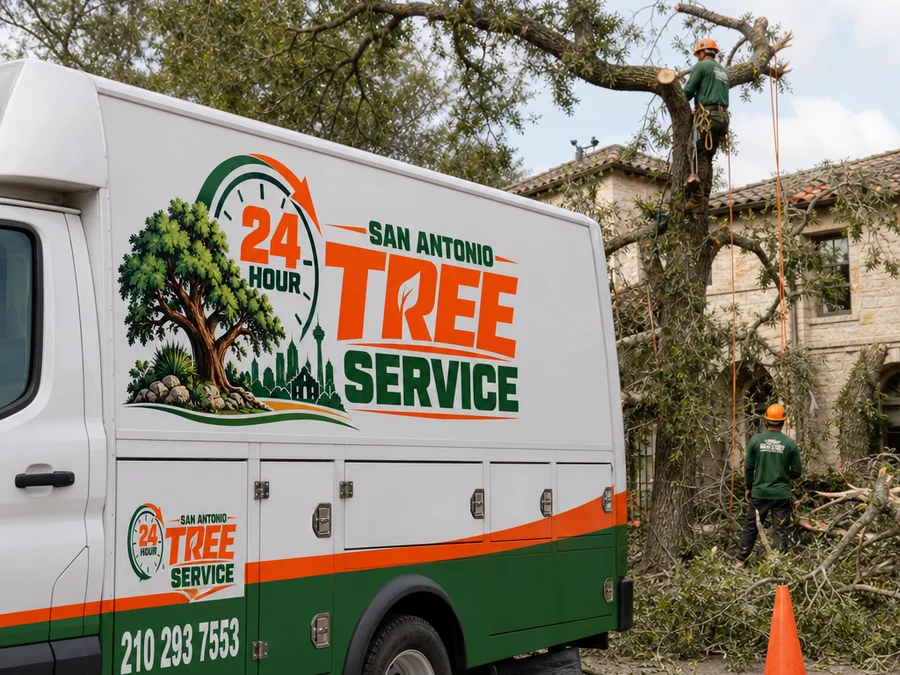
If there's a roof, fence, pool, or landscaping below, the bid should assume controlled lowering, not free-falling branches.
Confirm whether brush and wood are chipped and hauled away, stacked on-site, or left as rounds. Cleanup expectations change pricing.
Knowing whether it's a quick touch-up or a half-day crew helps you compare quotes and plan for driveway or gate access.
A written estimate should match the agreed scope so you can avoid misunderstandings when the crew arrives.
From Details to Final Walk-Through
The estimating sequence connects your pruning goal to access, risk, cleanup, and a clearly written scope.
We start with the tree type (if known), approximate height, what you want to accomplish, and any concerns like roof clearance or broken limbs. Photos help us plan the visit.
We look at access, targets below the canopy, tree health, and where cuts should be made to meet your goal without over-pruning.
You get an itemized description of the trimming approach, what gets removed, and what happens with the debris.
Our crew sets up for safe cutting, uses rigging when needed, and completes cleanup according to the agreed scope.
Before we leave, we review the work with you so you can confirm clearances and the finish level around the work area.
“The estimate explained exactly what would be trimmed and what would be hauled off. The crew showed up prepared, protected the roof line, and cleaned up the driveway and sidewalk when they were done.”
Maria L.
“I had two large limbs over the fence and didn't want them dropped into the neighbor's yard. They used ropes and lowered everything down in sections. The price matched the written scope.”
Derrick S.
Understand the Estimate
Tree trimming prices change most with risk and access, even when two trees look similar from the street. A tree over a roof, near power lines, or only reachable through a backyard gate usually requires more labor, rigging, and time than a tree with open access and a clear drop zone.
Yes, trimming near electrical lines typically costs more because the work has to be slower and more controlled, and the safest approach may involve utility coordination. If any limb is within reach of energized lines, treat it as a professional-only job and avoid ladder or pole-saw attempts.
A simple trim is usually priced as a smaller scope like removing deadwood, clearing a roofline, or raising low limbs for driveway clearance. A full canopy prune takes longer because it involves selective cuts throughout the crown to reduce weight, improve structure, or thin for airflow, plus more debris to chip and haul.
Often, yes, because the crew can spread setup time and equipment staging across several trees in the same visit. The price still depends on each tree's size and difficulty, but combining work can reduce the per-tree cost compared with separate trips.
Avoid bids that are dramatically lower without a clear scope, especially if the plan is to remove large amounts of live growth quickly. Over-pruning can create long-term problems that cost more later, including weak regrowth and sunscald on exposed limbs.
An exact price usually requires an on-site look because access, hazards, and the amount of pruning needed are hard to confirm from a description alone. Photos can help narrow the range, but the final cost is best set after evaluating the canopy, targets below, and equipment access.
Know the Scope Before Scheduling
Share what you want the trim to accomplish and when you're hoping to schedule. 24 Hour Tree Service San Antonio will confirm scope, access, cleanup expectations, and a fair price based on what your trees actually need.