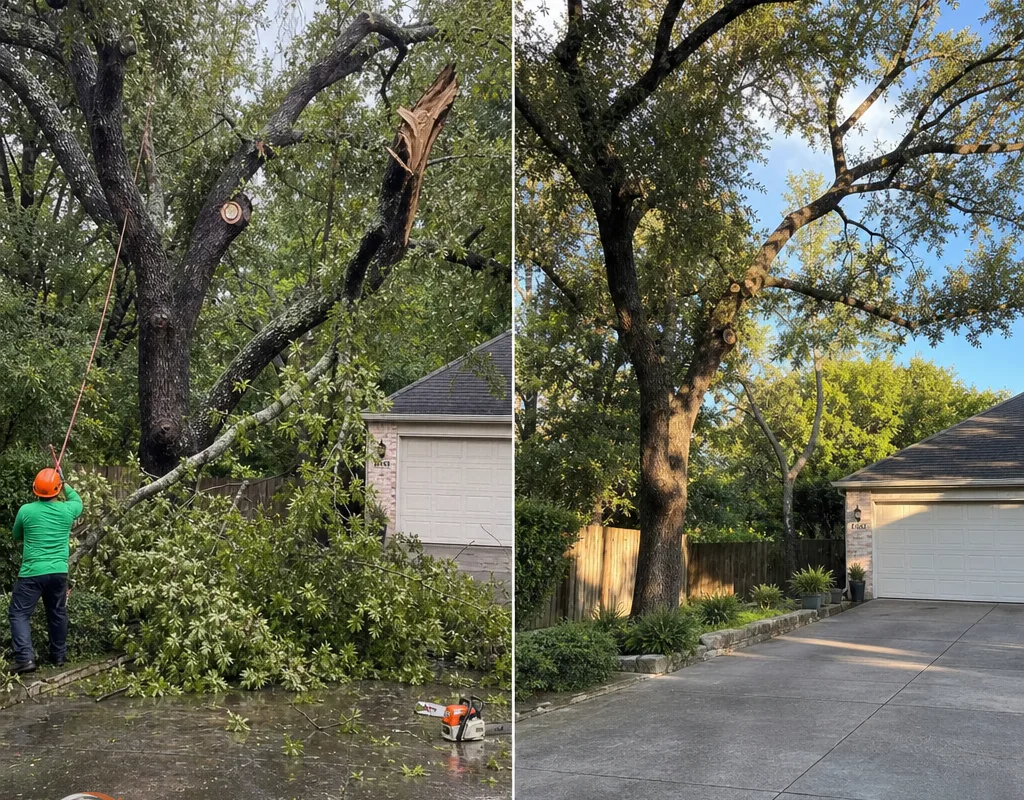
Hazard assessment after storms
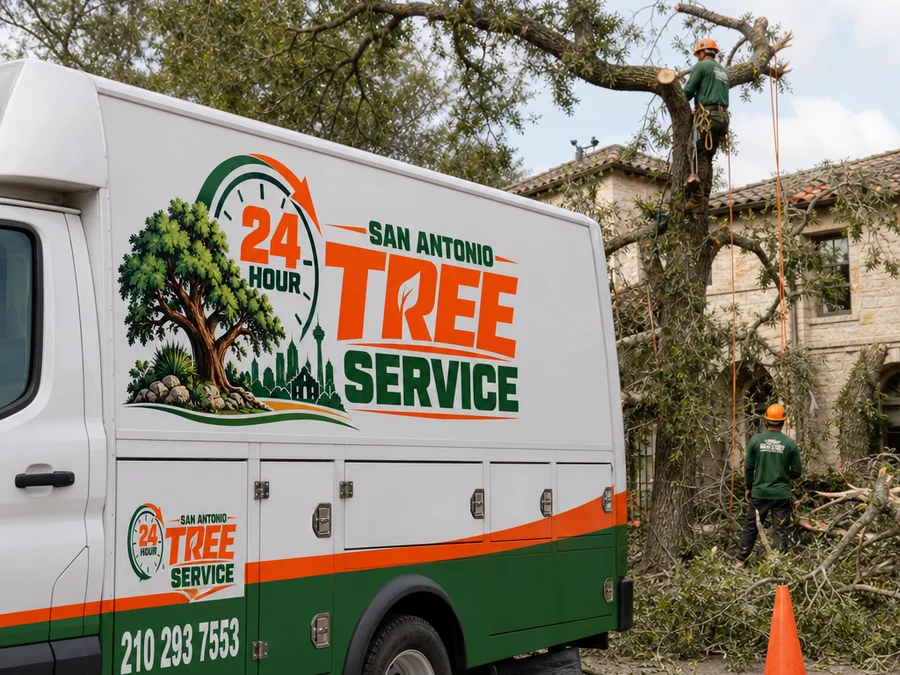
We look for split leaders, lifted root plates, cracked crotches, and dead hangers. If a limb is suspended or twisted, we plan the cut sequence and rigging so it comes down under control.
Serving San Antonio, Texas & surrounding areas
Tree Surgeon Service · San Antonio, Texas
For hazardous limbs, storm damage, and high-risk removals, you want a careful plan and the right gear. Our crew handles technical tree work with tidy cleanup and clear communication from the first inspection to the final haul-off.
✓Hazard Assessment
✓Controlled Rigging
✓Property Protection
✓Debris Haul-Off
Safety-First Tree Care
If you searched for a tree surgeon San Antonio homeowners trust, you are likely dealing with a problem that is more technical than routine yard work. A tree surgeon focuses on safety-first tree care: diagnosing risk, selecting the right cut points, and using climbing and rigging systems to control what comes down and where it lands.
That matters in San Antonio because trees often sit close to homes, fences, driveways, and overhead lines. After a wind event, a tree can look fine from the ground while a cracked union or hanging limb is waiting to drop. A surgeon-level approach means we do a quick but disciplined risk read, then choose the least invasive method that still solves the hazard.
24 Hour Tree Service San Antonio provides on-site evaluations across the metro area and recommends a scope that matches the situation: targeted pruning, cabling support when appropriate, or controlled dismantling when the structure is compromised. If your job is primarily a removal, our main tree removal service is built around the same safety standards and equipment, just scoped for full take-downs.
Technical Help for Difficult Trees
We look for split leaders, lifted root plates, cracked crotches, and dead hangers. If a limb is suspended or twisted, we plan the cut sequence and rigging so it comes down under control.
Selective cuts reduce sail in the canopy and help keep limbs off roofs, driveways, and sidewalks. The goal is structure and clearance, not over-thinning or topping.
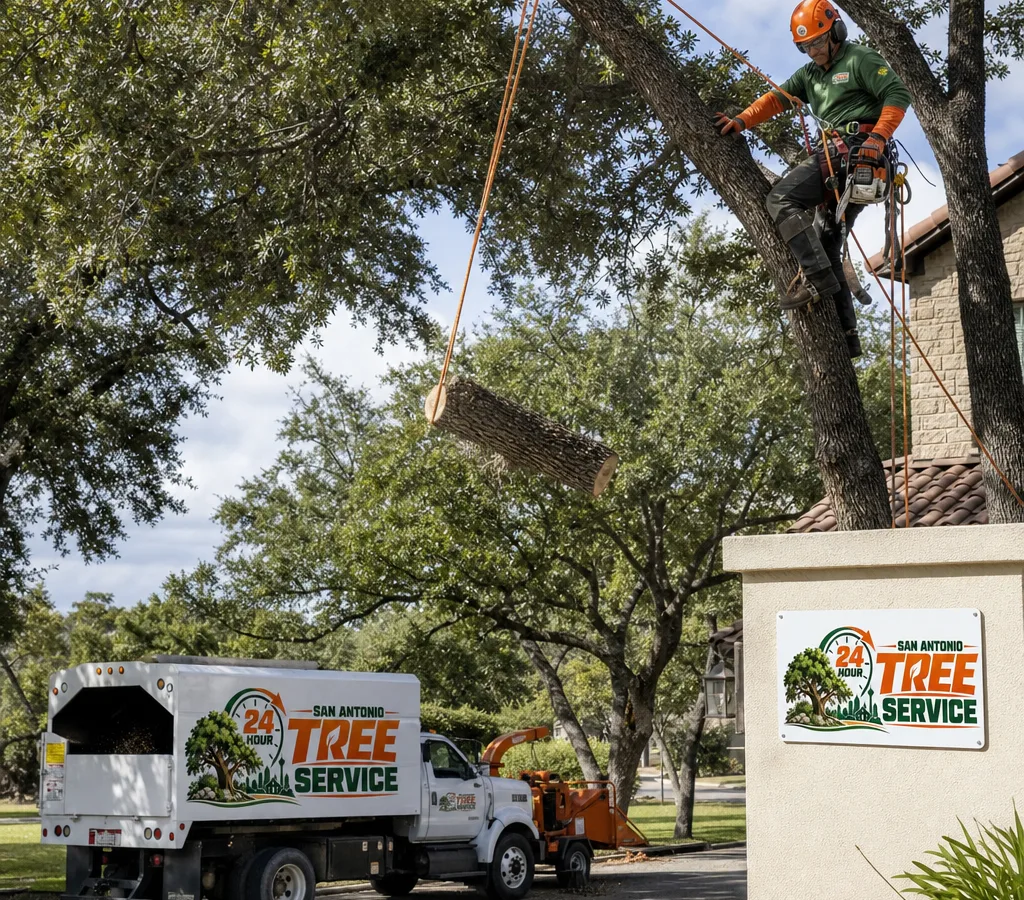
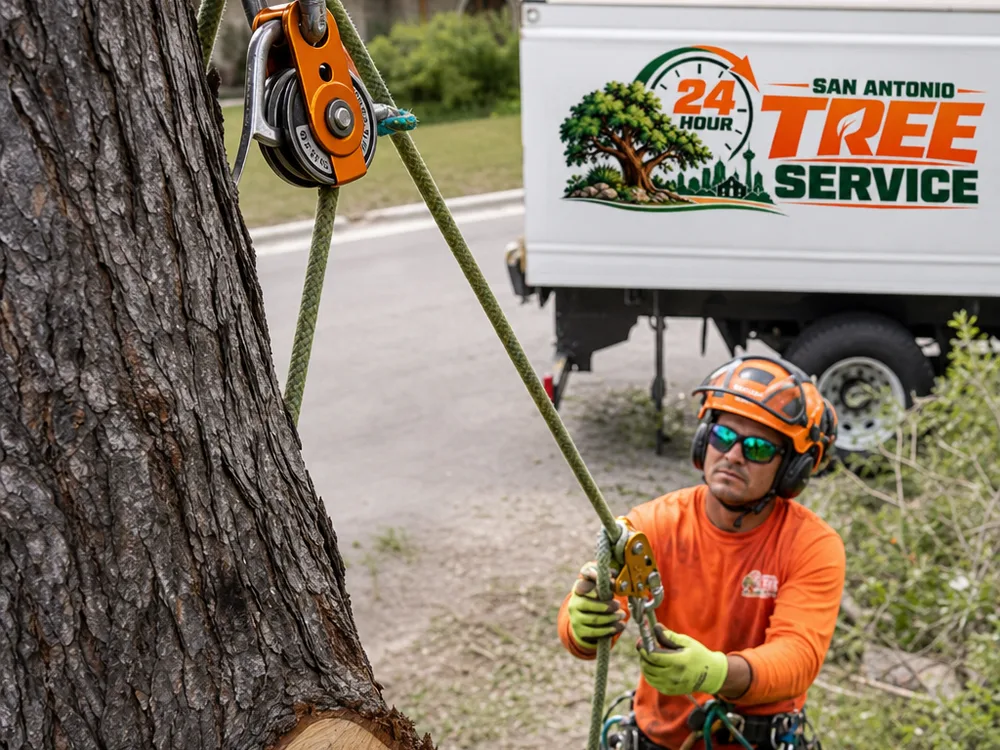
When there is no safe drop zone, we dismantle in pieces using rope rigging, friction devices, and ground control so sections can be lowered away from structures.
Deadwood over patios and play areas is a common risk. We remove dead, rubbing, and compromised limbs and flag structural concerns that may need a broader plan.
Downed limbs can block driveways and gates or sit under tension. We cut and stage debris safely, then chip and haul so the property is usable again.
Planning Before Cutting
High-risk tree work is won or lost before the first cut. We start by defining the drop zone, identifying targets (rooflines, vehicles, fences, neighboring yards), and choosing the safest access method: climbing with a rope system, using a bucket when it improves safety, or working from the ground when the canopy is reachable.
Next comes rigging and cut planning. For removals and big limb reductions, we set lines and hardware so pieces can be lowered, not free-fallen. We watch for compression and tension in the wood, barber-chair potential on leaned stems, and hang-up risk in adjacent canopies. If a limb is loaded or twisted from storm damage, we cut in a way that releases energy predictably.
On every job, we also plan for the jobsite, not just the tree. San Antonio neighborhoods vary from wide front setbacks to tight driveways and shared fence lines. If equipment access is limited, we plan smaller piece sizes and a more deliberate lowering sequence. When access is easier, we still prioritize protection: plywood on turf where needed, careful chipper placement, and a cleanup that leaves the area raked and walkable.
If power lines are part of the picture, we keep a strict separation distance and do not treat utility conductors like normal obstacles. When a tree is entangled with lines, the right next step is coordination with the utility provider, then completing the work once the hazard is made safe.
Inspection to Cleanup
Each job follows a controlled sequence built around the tree, nearby property, and safe debris handling.
We walk the tree from root flare to canopy and note lean, canopy balance, deadwood, cracks, included bark, and nearby targets. You get a clear scope that matches what the tree needs, not a generic trim.
We confirm access, set the drop zone, and protect the work area as needed. If the job requires rigging, we set anchor points and define who is controlling the lowering line.
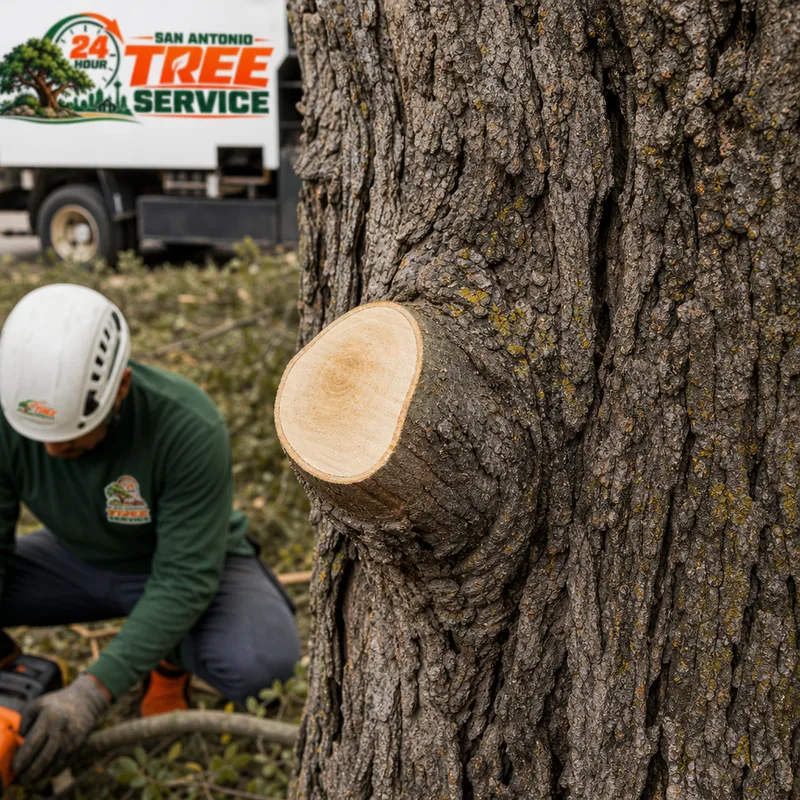
We make deliberate cuts to reduce risk to property and people. For removals or large limbs, pieces are lowered and managed, not allowed to swing into targets.
Brush is chipped and wood is staged for hauling. We rake and blow the area so it is safe to walk through, and we confirm any follow-up recommendations before we leave.
Inspection-Based Pricing
Tree surgeon work in San Antonio typically ranges from about $250 to $900 for targeted pruning or hazardous limb removal, while technical removals with rigging often run $900 to $3,000+ depending on size and complexity. Small storm cleanups may be lower, and crane-assisted or very large removals can be higher.
Final price depends on tree height and trunk diameter, how much is being cut, proximity to roofs or lines, access for equipment, whether rigging is required, and how much debris you want hauled. Exact cost is confirmed after an on-site inspection and a written scope.
Controlled Work, Clean Results
Answers Before Work Begins
Yes, we respond to storm-related hazards like hanging limbs, broken tops, and trees that have shifted or partially failed. The first priority is making the area safe, then we plan the cut sequence so loaded or suspended wood comes down under control and can be removed or staged neatly.
A tree surgeon is equipped and trained for higher-risk work: climbing systems, technical rigging, controlled dismantling, and structural decision-making about what to remove versus what to retain. For jobs near roofs, fences, or tight yards, that approach reduces the chance of property damage and uncontrolled falls.
Yes, and in most cases you should avoid topping because it creates weak regrowth and can increase failure risk later. We use reduction cuts and selective thinning where appropriate, keeping the tree's structure in mind and focusing on clearance, weight reduction, and removing compromised limbs.
We can haul debris away, leave it on-site, or split the difference depending on what you want and what the jobsite allows. If you want to keep wood, tell us during the estimate so we can stage rounds where they are accessible and keep the work area safe.
Scheduling depends on the hazard level and weather, but we prioritize urgent situations like hanging limbs over driveways, damage over occupied areas, and trees that are actively failing. When you reach out, share photos and note what the tree is near (roof, driveway, neighbor's fence) so we can triage correctly.
Keep people and pets away from the tree, avoid parking under affected limbs, and do not cut or pull on branches that are under tension. If access through a gate is needed, clear the path and move fragile items near the work area so we can set a safe drop zone quickly.
Inspect the Risk First
Send a few details about the tree and what it is near, and we will schedule an on-site inspection in San Antonio. You will get a clear scope, a realistic timeline, and a cleanup plan that matches your property.